
MARKET BRIEF
Top line: One number can offer a quick snapshot of global stock trends.
So what: By watching indices like the S&P 500 (USA, Nasdaq/NYSE) and FTSE 100 (UK, LSE), you can spot shifts early and tweak your portfolio on the fly.
Imagine one figure guiding your financial decisions. Global market indices combine data from top players to give a clear view of worldwide trends. These composite measures capture both market strength and liquidity (the ease of buying or selling assets), helping you catch early signs of change. This insight paves the way for smarter moves in fast-paced markets.
Let’s dig into how these indices shine a light on key investor trends.
Global Markets Index: Definition and Composition
Global market indices show you how stocks worldwide are performing by tracking groups of companies chosen for their market cap, industry, and ease of trading. They highlight economic trends and market stability across different regions. For more info, check the global markets definition.
For example, the S&P 500 (USA, Nasdaq/NYSE) follows top U.S. companies, while the FTSE 100 (UK, LSE) tracks leading British firms. Japan’s Nikkei 225 (Japan, Tokyo Stock Exchange) reflects trading in one of Asia's largest markets. Composite indices like MSCI World and MSCI ACWI cover both developed and emerging markets, giving investors a broader view of global finance.
These indices serve two main roles. They guide investment decisions and also underpin products like ETFs that mirror market trends. Traders monitor them to gauge market mood, spot performance shifts, and plan portfolio changes.
Here's a surprising fact: Before becoming famous, Marie Curie used to carry test tubes in her pockets. This odd habit shows her relentless curiosity.
Each index weighs its parts by size, so larger companies move the index more. This setup offers investors a clear benchmark to track changes in global financial conditions during different economic times.
Global Markets Index ignites promising investor trends

Global indices are built using clear methods that decide how much each part affects the overall number. Market-cap weighting, for example, gives more influence to larger companies. This is evident in the S&P 500 (which uses float-adjusted market caps). On the other hand, price weighting looks only at stock prices, as seen with the Nikkei 225. There is also equal weighting, where every stock is treated the same, so the performance of smaller companies matters just as much as that of giants.
Index makers choose these methods to balance factors like liquidity (how quickly assets can be bought or sold) and sector representation. Traders appreciate that each method reveals a different view of market activity. Market-cap weighting highlights big economic players, while equal weighting offers a picture that treats every company equally. In addition, emerging smart-beta strategies include factors such as volatility (price swings) and momentum to capture trends that standard methods might overlook.
| Method | Description | Example Index |
|---|---|---|
| Market-Cap | Assigns weight based on a company’s market capitalization | S&P 500 |
| Price | Weights stocks based solely on their share price | Nikkei 225 |
| Equal Weighting | Gives each stock the same influence, regardless of size | Equal Weight S&P 500 |
These varied strategies provide promising trends by letting investors track global markets from different angles.
Global Markets Index Performance: Current Metrics and Volatility
Top line: Key indices show steady gains amid shifting market drivers.
Investor attention is focused on the numbers. The FTSE 100 closed at 64.62, up 0.61%, while the CAC 40 reached 110.71, up 1.32%. U.S. indexes, after modest gains on Thursday, rallied on Friday once the Supreme Court reversed global tariffs. This decision boosted confidence and triggered fresh buying.
Geopolitical issues, especially tensions between the U.S. and Iran, continue to affect oil prices and add market volatility. Energy cost changes can quickly impact markets sensitive to commodity prices. Meanwhile, minutes from the Federal Reserve (the Fed) show a divide: some officials favor more easing if inflation drops, while others lean toward rate hikes if inflation holds. This split leaves traders cautious.
The bond market mirrors these trends. High-yield bonds (which offer higher returns but carry more risk) have outperformed U.S. Treasuries as investors hunt for better yields. This shift in fixed income serves as a counterbalance to equity gains and hints at broader changes in risk sentiment.
- Volatility drivers include judicial policy shifts, geopolitical tensions that influence oil prices, and divided views on monetary policy.
- Key performance metrics: FTSE 100 at 64.62 (up 0.61%) and CAC 40 at 110.71 (up 1.32%).
These insights provide a basis for traders to adjust their positions as the global market environment evolves.
Global Markets Index Historical Trends and Economic Cycles

U.S. real GDP growth slowed to 1.4% annualized in Q4 2023, down from 4.4% in Q3. Other economic data points tell a similar story. For example, Eurozone industrial production fell by 1.4% from November to December, and early-February PMI data showed a clear jump in new orders. These shifts highlight changing economic momentum across regions.
Equity benchmarks usually rise during expansions and fall in downturns. In one market rally, gains nearly doubled in just a few weeks, much like how a quick boost in consumer confidence can push indices to temporary highs. This pattern is important for understanding how markets react as economic conditions change.
In Japan, the economic picture looks different. Q4 GDP expanded by only 0.2%, far below the expected 1.6%, and core CPI eased to 2.0% year-over-year, the slowest pace seen in two years. These numbers show how national economic data can weigh on market performance.
As market indices move through different economic cycles, they mirror the overall health of the economy. They capture both recovery periods and the downturns seen in recessions. By studying these trends, investors can better estimate future market movements and adjust their strategies accordingly.
Global Markets Index ignites promising investor trends
Global market indexes show clear regional differences that open up new opportunities for investors. European indexes are outpacing Asian ones, largely thanks to strong economic data and supportive monetary policies. You can use these insights to rebalance your portfolio and take advantage of local momentum. For example, composite indexes like MSCI World (a global benchmark) and MSCI ACWI (All Country World Index) mix different sectors and economies into one snapshot for better diversification.
Looking closer at the numbers, Europe stands out. STOXX Europe 600 jumped 2.08% in local currency, signaling robust corporate performance across the region. Germany’s DAX was up 1.39%, while Italy’s FTSE MIB climbed 2.29%. France’s CAC 40 led with a 2.45% gain, and the UK’s FTSE 100 followed at 2.29%. These moves reflect growing investor confidence in Europe’s stable economic backdrop.
On the other hand, Asian markets are giving mixed signals. Japan’s Nikkei 225 dropped 0.20%, suggesting caution among investors amid domestic challenges and recent monetary policy moves. Likewise, Hong Kong’s Hang Seng fell 0.58% after the Lunar New Year, underscoring how local events can shift market sentiment.
Comparing these regions can help you diversify your portfolio. Since each index reflects different sector mixes, economic policies, and growth prospects, using this data can guide you in balancing stronger European positions with a more measured approach in Asia-Pacific.
| Index | Region | Latest Change (%) |
|---|---|---|
| STOXX Europe 600 | Europe | 2.08 |
| DAX | Germany | 1.39 |
| FTSE MIB | Italy | 2.29 |
| CAC 40 | France | 2.45 |
| FTSE 100 | UK | 2.29 |
| Nikkei 225 | Japan | -0.20 |
Global Markets Index: Sector and Country Insights
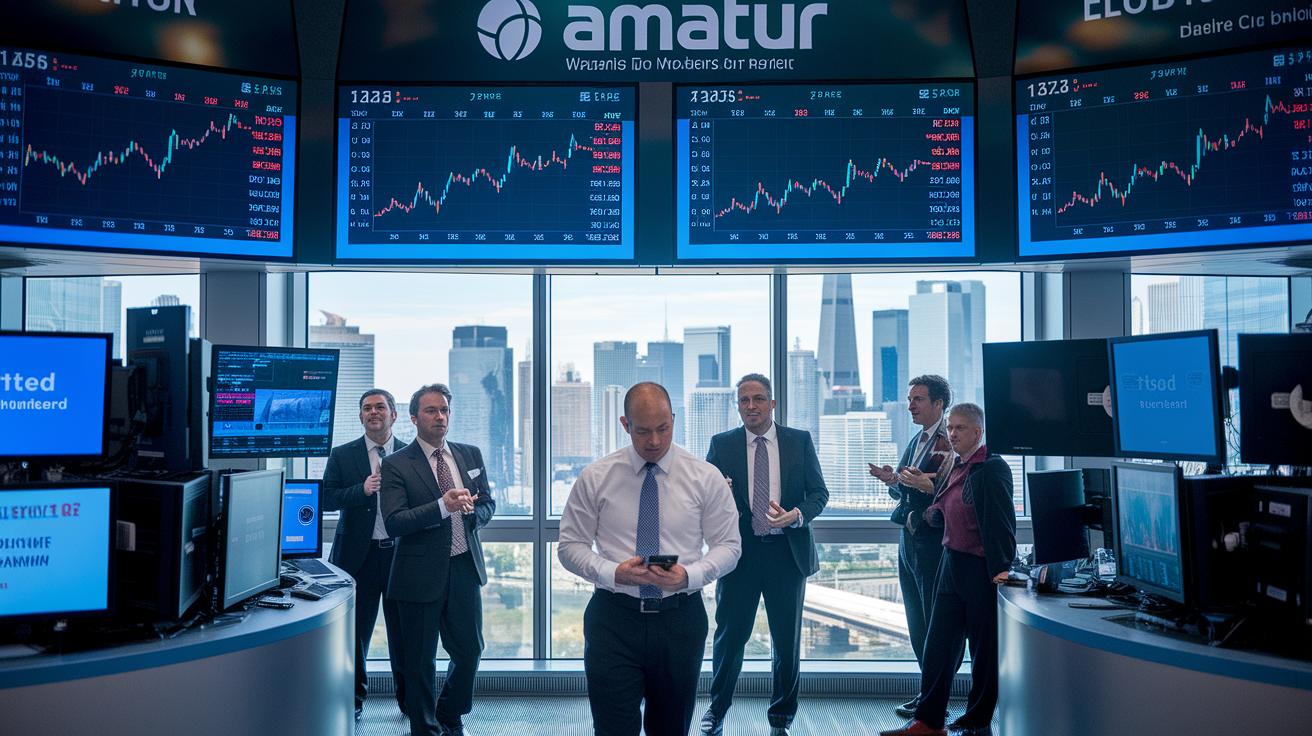
Top line: Technology stocks are driving market gains while regional differences highlight varying economic strengths.
So what: Watch tech surge in global markets and adjust exposure in Japan and the Eurozone based on these shifts.
Technology stocks are leading gains worldwide. Their strong performance has sparked a rally in high-yield bonds as investors seek better returns, even while consumer and industrial stocks show mixed outcomes. This split underlines how different sectors react to new economic data and shifting market moods.
In Japan, the Nikkei 225 is held back by its sector mix. Even as tech stocks advance, underperformance in traditional industries limits broader gains. The core consumer price index falling to 2.0% hints at weak domestic momentum. At the same time, Japan’s 10-year government bond yield dipped from 2.23% to 2.10%, reflecting a shift in investor confidence that influences wider market trends.
Over in the Eurozone, cyclical sectors are feeling the pressure. Industrial output dropped 1.4% sequentially in the latest data, putting strain on manufacturing and basic materials. This slowdown can hurt consumer spending and business investment, further impacting indices tracking these areas.
Investors use these insights to fine-tune their portfolio strategies, focusing on regions and sectors with stronger economic signals. By keeping an eye on both broad index trends and country-specific data, you can better balance the risks and rewards in today’s market.
Global Markets Index: Portfolio Diversification and Risk Strategies
Top line: Investors build strong portfolios by using global indices to spread risk across many sectors and regions.
So what: Using ETFs that follow benchmarks like MSCI ACWI or FTSE All-World lets traders tap into a wide range of stocks without picking each one, helping to cushion against a downturn in any single area.
Investors use global indices as a key building block for diverse portfolios. These indices often serve as the base for ETFs (a type of investment fund traded like a stock) and futures, providing quick access to many sectors and regions. By investing in ETFs that track benchmarks like MSCI ACWI or FTSE All-World, you avoid the hassle of buying stocks one by one and reduce your exposure to any one economy or industry.
Dynamic rebalancing is another tool that can boost risk-adjusted returns. This means frequently checking and adjusting portfolio weights as market conditions shift. Investors turn to simple risk measures like beta (a gauge of a stock’s volatility compared to the market) and drawdown (the decline from a portfolio’s peak value) to know when risk is too high. They then reallocate funds to help avoid bigger losses or grab gains during recoveries.
Investors also keep an eye on how index funds perform around the world to fine-tune their diversification. Regular reviews can point to changes in market trends. For example, if a sector within a global index becomes more unstable, portfolio managers might reduce exposure there and shift towards steadier areas. This flexible approach not only defends against sudden market moves but also sets the stage for long-term growth.
Innovations and Future Trends in Global Markets Index

Smart-beta and factor-based indices are reshaping how we measure market performance. They mix traditional weightings with tweaks that emphasize factors like volatility and momentum. For instance, one smart-beta index might weigh companies with strong earnings growth more heavily, giving traders a fresh perspective on market strength. Before risk models were refined, investors relied on static benchmarks and missed subtle shifts in market volatility.
Another trend is the growing integration of ESG criteria (environmental, social, and governance factors) into index design. This method considers not just financial performance but also sustainable practices, appealing to a growing number of responsible investors. Adding derivative overlays like futures and options further refines exposure by allowing traders to take targeted short-term positions.
Machine learning models are now being tested to adjust index weights in real time, ensuring that indices better mirror live market shifts. Meanwhile, real-time analytics tools let you track trends as they happen, turning raw data into practical insights. Together, these innovations equip traders with smarter tools to manage portfolios in today’s increasingly complex market landscape.
Final Words
In the action, we broke down the basics of the global markets index. We covered definitions, calculation methods, and recent performance metrics. The piece touched on historical trends, comparative regional insights, and practical risk strategies. We also looked at how emerging innovations are reshaping index construction. This overview gives you a clear, concise roadmap to spot opportunities and manage risk. Enjoy using these insights to empower your trading decisions and keep your strategies sharp.
FAQ
What do global market index charts, graphs, and historical data reveal?
Global market charts reveal price trends, volatility, and performance snapshots of international stock markets. They help traders track historical trends and identify shifts in market sentiment.
What does world market index live data show?
World market index live data displays real-time trading figures from global exchanges. It lets investors monitor ongoing market movements and current sentiment across multiple regions.
How can I view a live world stock market map and chart?
A live world stock market map offers a visual layout of regional market performance, while related charts display price movement over time. Both tools assist in spotting market trends and regional shifts.
What is the global market index?
The global market index measures the performance of multiple international stock markets through baskets of selected stocks. It reflects economic trends and market sentiment worldwide.
What is the global equivalent of the S&P 500?
The global equivalent of the S&P 500 often refers to broad international indices like MSCI World or MSCI ACWI, which aggregate leading stocks from developed and emerging markets for global exposure.
What are the top 10 stock markets in the world?
The top 10 stock markets are those with the largest market capitalizations, such as the New York Stock Exchange, NASDAQ, Tokyo, London, among others, reflecting major centers of trading and investment influence.
What does global market trading involve?
Global market trading involves buying and selling securities on international exchanges. It helps investors diversify portfolios by accessing varied markets and regional economic trends.
Should a 70-year-old exit the stock market?
Deciding whether to leave the market depends on individual risk tolerance, income requirements, and overall financial goals. A financial advisor can help tailor a strategy for preserving wealth and meeting retirement needs.
What’s the best global index fund?
The best global index fund varies by investor needs. Funds tracking benchmarks like MSCI World or FTSE All-World offer broad diversification, keeping fees in check while providing global market exposure.