
MARKET BRIEF
Top line: Knowing how forex quotes work can clear up trading confusion.
So what: Grasping the roles of base and quote currencies makes your trade decisions smarter.
Ever feel lost when looking at a forex quote? Picture it like a store price tag that shows one price for selling and a different one for buying. In forex, the first number (base currency) is what you are trading, while the second (quote currency) tells you the cost in another money unit.
Understanding these simple details can boost your trading skill and confidence. Get comfortable with these basics, and you might just find the clarity needed for smarter trades.
Breaking Down Currency Pair Quotes: Base vs Quote Fundamentals
A forex quote shows two currencies. The first one is the base currency, which is the asset you are trading. The second, known as the quote currency, tells you how much you need to buy one unit of the base. For instance, in the quote EUR/USD 1.1700/1.1703, EUR is the base and USD is the quote. Here, 1.1700 is your bid price (the rate at which you can sell EUR) and 1.1703 is your ask price (the rate at which you can buy EUR).
Understanding these components is key for smart trading. It is like checking a store price tag: one number shows how much you will receive if you sell, and the other tells you what you need to pay to buy. The small gap between the bid and ask prices is called the spread. For example, a spread of 0.0003 means you face that tiny price gap when you enter a trade.
This clear breakdown helps you understand forex quotes better. Grasping the roles of both the base currency and the quote denomination is essential, as even slight differences in these numbers can have a big impact on your profit and loss in live trading.
Currency Pair Order Conventions and Identifying Market Symbols
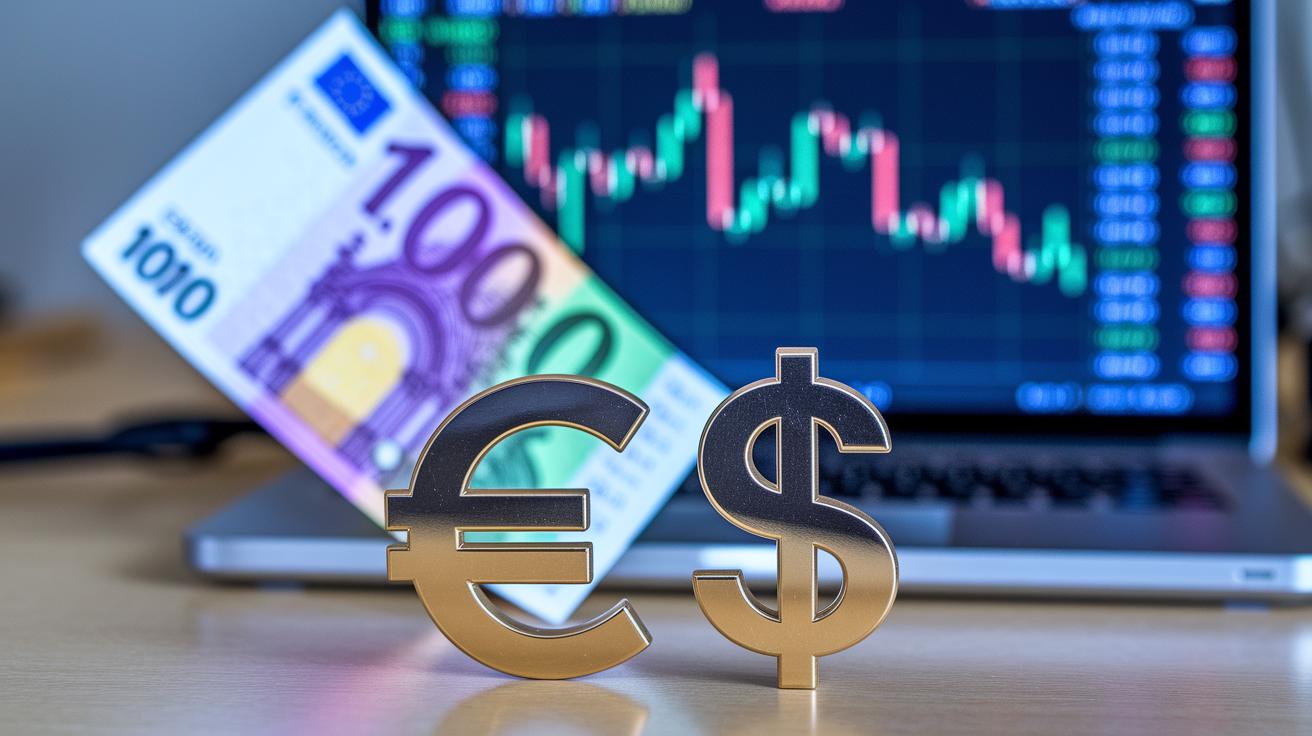
Top line: In forex trading, currency order follows a traditional pattern that quickly tells you which is the base and which is the quote.
In forex, listing currencies is not random. Major G10 currencies appear in a set order: EUR, GBP, AUD, NZD, USD, CAD, CHF, NOK, SEK, and JPY. In the pair EUR/USD, the euro is the base because it comes first by market custom. This means you are trading euros for dollars.
What to watch:
- The base currency is almost always the first one listed.
- Sometimes, when USD pairs with JPY or CAD, the dollar may come first.
- The order comes from long-established market practices rather than a strict rule.
Think of it like a familiar team lineup where each player's position has been set over years. Recognizing these patterns makes it easier to break down your trade and build strong strategies.
Decimal Pricing and Pip Precision in Forex Quotes
Decimal pricing in forex quotes shows the smallest price move you can see in a currency pair. Before 2005, most pairs were shown with four decimal places. In these quotes, that final number represents one pip (the smallest unit of price movement). Traders planned their strategies around this standard. Nowadays, many currency pairs are quoted with five decimals, giving extra price detail that matters during quick moves.
For pairs involving the Japanese yen (JPY), the norm is a three-digit quote. This change makes sense because even small differences are key for accurate pricing. Note that while a pip is usually the fourth decimal in most quotes, many platforms now include pipettes, which add one-tenth of a pip. For example, if EUR/USD shifts from 1.17003 to 1.17013, that extra digit can have a real impact.
Imagine comparing Apple’s stock ticker at $150 with a forex quote where even a tiny extra number can change your profit outcome.
Grasping these details is vital. Keeping a close eye on decimal shifts helps traders manage risk and fine-tune when to enter or exit a trade. Accurate decimal precision is a cornerstone of effective forex trading.
Direct vs Indirect Quotes: Interpreting Exchange Rate Presentation

Direct quotes tell you how many units of your home currency you need to buy one unit of a foreign currency. Take EUR/USD at 1.1700, for example. That means U.S. traders need $1.17 to pick up one euro. On the other hand, indirect quotes show how much foreign currency you get for one unit of your home currency. So if you see USD/JPY quoted at 110, you get 110 Japanese yen for every dollar.
Understanding these different formats is key when you compare rates across trading platforms, especially if your account is in your home currency. Think of it like reading a menu: one section shows you the price to get a slice of pizza (direct), while another shows how many slices you can get for a set price (indirect).
When you look at quotes, keep these points in mind:
- First, figure out whether the quote is direct or indirect in your home currency.
- For direct quotes, ask yourself, "How many dollars do I need for one euro?"
- For indirect quotes, ask, "How many yen will I get for each dollar?"
Imagine you see a direct quote for EUR/USD and an indirect quote for USD/JPY on your screen. You would use the reciprocal of one of the rates to compare them and choose the best trading strategy. Reading and interpreting conversion data correctly is essential. It ensures your trade instructions are set up right and that your profit and loss calculations reflect the true exchange rate.
Quick note: In markets where even fractions of a percent matter, one small mistake in reading a quote can change the outcome of your trade.
How to Read Bid, Ask Prices and Calculate the Spread in Currency Pairs
When trading forex, knowing your bid and ask prices is vital. In a quote like 1.3050/1.3053 for GBP/USD, the first number is your bid price and the second is the ask price. The spread here is the difference between the two, 1.3053 minus 1.3050 gives you 0.0003 (or 3 pips).
Top tip: Even a 3 pip spread can impact your trade profit when margins are narrow, so always factor it into your risk and reward setup.
How to calculate the spread:
- Note the bid price (the first number).
- Identify the ask price (the second number).
- Subtract the bid from the ask (for example, 1.3053 – 1.3050 = 0.0003).
Keep the spread in mind as a trading cost before you execute any trades. For more on applying these skills in live trading, see our guide on how to trade forex: https://bankingcorner.com?p=282
Avoiding Common Pitfalls in Reading Currency Pair Quotes

Top line: Many new traders trip up on basic quote details that can cost them money.
So what: Double-check key price definitions and pip values to avoid costly errors.
New traders sometimes confuse the bid and ask prices. Remember, the bid is what you get when selling the base currency, and the ask is what you pay to buy it. Mixing these up can lead to miscalculated trade costs.
Another area where mistakes occur is with pip values. For example, in Japanese yen (JPY) pairs, the pip size is smaller because the quote only shows two decimals. This means you might set profit targets or stop-loss levels too high or too low if you don’t adjust for the smaller pip value.
Exotic currency pairs can also be tricky. These pairs often have wider spreads (ranging from 20 to 50 pips, adding roughly $200 to $500 per standard lot). Before trading exotics, make sure you check the pip value to understand the real cost.
It is also easy to misinterpret direct versus indirect quotes. A quick review of previous guidelines can help ensure you read the rates correctly.
Common mistakes include:
- Confusing bid and ask prices
- Overlooking the smaller pip value in JPY pairs
- Underestimating the extra cost from wide spreads in exotic pairs
- Misreading direct versus indirect quotes
Always take a moment to verify each of these points, reviewing definitions and rules to keep your calculations accurate.
Final Words
In the action, we explored key elements of forex quotes, from identifying the base and quote currencies to distinguishing bid and ask prices. We broke down decimal pricing, pip precision, and the trading order for major pairs, and highlighted common pitfalls to avoid. This guide shows you how to read a currency pair quote (base vs quote) clearly and confidently for better trade decisions. Stay alert to market signals and trade with measured confidence. Here's to clear charts and smart moves ahead.
FAQ
What happens when the base currency is stronger than the quote currency?
When the base currency is stronger than the quote currency, its value increases relative to the quote. This means you need fewer units of the quote currency to buy one unit of the base.
What are base and quote currencies and can you provide an example?
Base and quote currencies form a forex pair where the first currency is the base and the second is the quote. For example, in EUR/USD, EUR is the base currency and USD is the quote, indicating how many USD are needed for one EUR.
How do you read a currency pair quote?
Reading a currency pair quote starts by identifying the first currency as the base and the second as the quote. Then you note the bid (sell) and ask (buy) prices to determine the spread, which is the trading cost.
How do you know which currency is the base in a currency pair?
You know the base currency by its position; it is always listed first in a currency pair. The second currency is the quote, showing how much is needed for one unit of the base.
What is the difference between the base and quote currency?
The base currency is the one you are buying or selling, while the quote currency provides the value needed to purchase one unit of the base. This pairing indicates the exchange rate in forex trading.
What is the 5-3-1 rule in trading?
The 5-3-1 rule in trading refers to a risk management strategy that helps allocate positions and manage trade sizes. It provides a framework for entry, stop, and target setups to control exposure.