MARKET BRIEF
Top line: Trading leverage lets you control bigger positions with just a small deposit, boosting your potential gains or losses.
So what: Even a small price move can have a big impact on your account.
Ever wonder if you can take on a massive trade with only a little cash? Trading leverage lets you borrow funds to increase your buying power. For example, a 10:1 ratio (meaning every $1 you put in controls $10 in the market) can turn small price shifts into significant profit or loss. In this piece, we explain how leverage works and why it might give you a greater edge in your trades.
What to watch:
- Leverage ratios used in your trades.
- How even minor price changes affect your positions.
- The balance between potential rewards and risks.
Defining Trading Leverage: Key Concepts
Leverage, also known as margin trading, lets you control a large position with only a small part of your own money. You deposit a margin as collateral, and your broker lends you the remainder. For instance, a 10:1 ratio means that for every $1 you invest, you control $10 by borrowing the extra $9.
This method uses ratios like 2:1 or 10:1 to show how much market exposure you get compared to your investment. Your gains or losses are calculated on the full position, not just on your margin deposit. While leverage offers greater buying power and efficient use of capital, it also ramps up risk. If the market moves against you, losses can quickly exceed your initial funds. For example, a small price move while using 10:1 leverage can significantly affect your returns. Understanding these basics can help you make smarter trading decisions.
How Trading Leverage Works: Ratios and Margin Mechanics
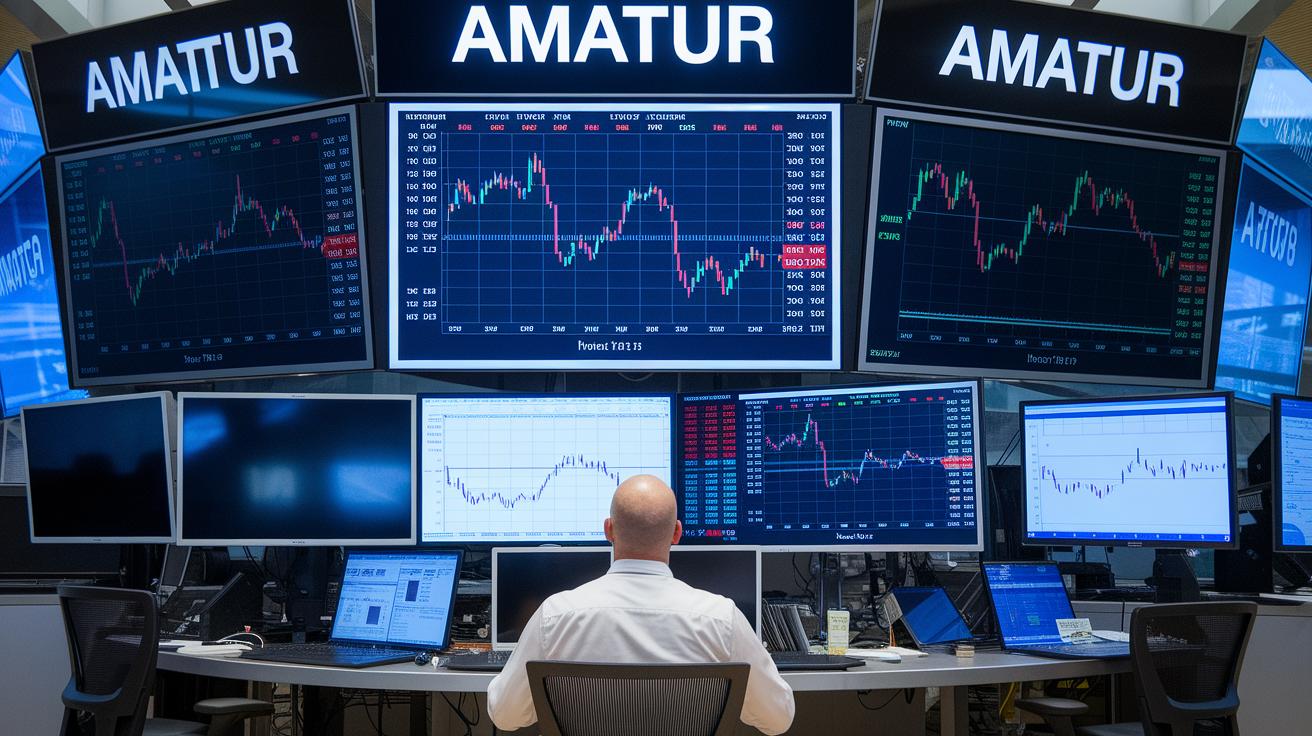
Leverage lets you use borrowed money to control a larger trade than your cash alone would allow. For example, with $1,000 and a 10:1 ratio, if a stock is priced at $20, an unleveraged trade buys 50 shares, but with leverage, you control 500 shares. This means that even small price changes can bring bigger profits or losses, and a drop might force you to add more funds if your account drops too far.
Margin trading means you only need to put up part of the full trade value as collateral while your broker lends you the rest. Remember, excessive leverage can turn a good trade into a loss quickly because any small unfavorable move affects the entire leveraged amount, not just your initial deposit.
| Leverage Ratio | Own Capital Required | Position Value | Borrowed Amount |
|---|---|---|---|
| 2:1 | $1,000 | $2,000 | $1,000 |
| 5:1 | $1,000 | $5,000 | $4,000 |
| 10:1 | $1,000 | $10,000 | $9,000 |
| 50:1 | $1,000 | $50,000 | $49,000 |
Understanding these mechanics is important. The leverage ratio you choose directly influences both your potential returns and the risks you face when the market moves.
Leverage Across Markets: Forex, Crypto, Stocks, and Futures
Forex Leverage
Forex platforms often offer high leverage ratios, sometimes up to 100:1 or even 500:1. You put up a margin (a small deposit) and borrow the rest to control larger trades. Because currency pairs can move quickly, a sudden market swing could trigger a margin call fast. For more on forex basics, check "what is forex trading" (https://bankingcorner.com?p=109).
Cryptocurrency Leverage
Crypto exchanges let you use leverage between 10x and 125x on major tokens. Even a slight price change can lead to swift gains or push you into liquidation if things go wrong. Keep in mind that funding fees on borrowed funds add to your costs, so knowing the token’s margin rules and withdrawal limits is crucial for managing risk.
Stock Market Leverage
In U.S. stock trading, margin rules under Reg T usually limit leverage to about 2:1. If you’re a pattern day trader, you need to hold at least $25,000 in equity to keep trading. While this lower leverage reduces exposure compared to other markets, margin calls can still occur, so careful capital management is key.
Futures Leverage
Futures contracts often allow leverage of 20:1 or more, based on specific initial and maintenance margin rules. The exact ratio depends on contract details and market volatility. It’s important to monitor your positions closely, as a maintenance margin call may force you to deposit more funds quickly.
Benefits and Risks of Trading Leverage

Trading with leverage lets you control larger positions with less cash, which can open up valuable opportunities if you manage risks wisely. Recent examples show that even small market moves can lead to margin calls if positions aren’t closely watched. For instance, in Q2 2023 a trader’s account quickly declined when market volatility affected unchecked leverage.
Using dynamic margin monitoring and well-placed stop-loss orders can help reduce such potential losses. Placing a stop-loss just below key support levels can limit damage, for example, if support is at $45, setting a stop at $44.50 could help protect your funds. Adjusting your leverage ratio based on market conditions also keeps exposure in check during volatile periods.
- Strategy: Use stop-loss orders
- Example: If support stands at $45, set your stop at $44.50.
- Strategy: Regularly adjust leverage ratios
- Example: Lower your leverage when technical indicators point to rising volatility.
- Strategy: Monitor real-time margin requirements
- Example: Set alerts to notify you when margin levels near critical points, such as 30%.
Additionally, careful position sizing and stress testing your strategy with up-to-date market data add important layers of protection.
Advanced Leveraged Trade Scenarios and Risk Management
Top line: High leverage can quickly turn small market moves into significant losses if risk controls are not in place.
Real-World Over-Leverage Case Study
A trader used a 20:1 leverage ratio on a mid-cap stock. With only a $1,500 deposit, they controlled a $30,000 position. When the market unexpectedly dropped by 3%, the position lost $900. Without stop-loss orders, that loss quickly wiped out much of the available margin and triggered a margin call. This example shows how even a small dip can lead to big losses when high leverage is used without proper risk management.
Comparative Leverage Risk Study
To compare, consider two situations. In one, a trader uses 50:1 leverage; in the other, a trader uses 100:1 leverage. Each starts with a $2,000 deposit. The same 1% market move affects both, but the impact is much larger at a higher leverage ratio.
| Leverage Ratio | Controlled Position | Market Move Impact (1% change) |
|---|---|---|
| 50:1 | $100,000 | $1,000 |
| 100:1 | $200,000 | $2,000 |
This study highlights that using 100:1 leverage doubles the dollar impact of a 1% market move compared to 50:1. It underlines the need to balance potential profit with the risk of rapid losses, especially in volatile markets. In short, careful planning and risk controls can make high leverage a tool for steady gains rather than a fast track to heavy losses.
Managing Risks in Leveraged Trading: Strategies and Best Practices

When you trade on margin, keep your risk in check by limiting any one trade to 3% of your available capital. For example, with a $10,000 account, you should never risk more than $300 on a single leveraged position.
Set up stop-loss orders so you leave a trade automatically if the market turns against you. It’s also smart to routinely check your positions using alerts to avoid nasty surprises like margin calls or forced liquidations.
Before you risk real money, practice on a demo account. This lets you refine your plan for position sizing, stop-loss settings, and exit points while keeping you disciplined and cutting down the risk of overleveraging.
Do your research on broker fees, interest charges, and margin-call policies ahead of time. Knowing these details helps you avoid common mistakes and builds a complete, manageable risk strategy.
- Strategy: Start with a low leverage ratio.
- Strategy: Set stop-loss orders and use alerts to monitor margin levels.
- Strategy: Practice your trading strategy on a demo account before going live.
- Strategy: Understand your broker’s fees and margin-call rules before committing funds.
Final Words
In the action, we explored key concepts of what is leverage in trading, from basic definitions and margin mechanics to varied examples across markets. The post detailed how ratios affect position size and profit calculation, while outlining practical trade setups and protective measures. Each section offered insights into both opportunities and risks, guiding you toward balanced risk-taking. Remember to approach leveraged trades with caution and confidence for a smarter market approach.
FAQ
What is leverage in trading forex, what is leverage in trading example, what is 1:100 leverage in trading, and what does 1 to 500 leverage mean?
Leverage in trading forex means using borrowed funds to control a larger position than your capital. For example, a 1:100 ratio means $1 controls $100, while 1:500 scales exposure even more.
What is leverage in trading haram and is leverage in trading halal?
Leverage in trading is seen by some as problematic under certain religious guidelines due to borrowing and interest elements. Views vary, and traders should consult knowledgeable advisors regarding halal considerations.
What is leverage in trading Binance?
Leverage on Binance lets traders use borrowed capital to increase their crypto market positions. This feature involves specific margin requirements, fees, and risks based on the token’s volatility and platform policies.
What is leverage in trading as discussed on Reddit?
On Reddit, traders describe leverage as a technique for amplifying both profits and losses by borrowing funds to significantly increase trade size. Discussions often focus on risk management and personal experience.
What is leverage in trading strategy?
Leverage in a trading strategy is the intentional use of margin to boost position size. This approach offers the potential for higher returns while also requiring disciplined risk management to handle increased exposure.
What is 20x leverage on $100 and what leverage is good for a $100 account?
Using 20x leverage on $100 means controlling a $2,000 position, which amplifies gains and losses. The choice of leverage for a $100 account depends on risk tolerance and experience, so conservative ratios are often recommended.
How does leverage work in trading?
Leverage works by allowing a trader to use a small margin as collateral to borrow funds for a larger trade. Profits and losses are based on the total trade value, not just the margin deposited.