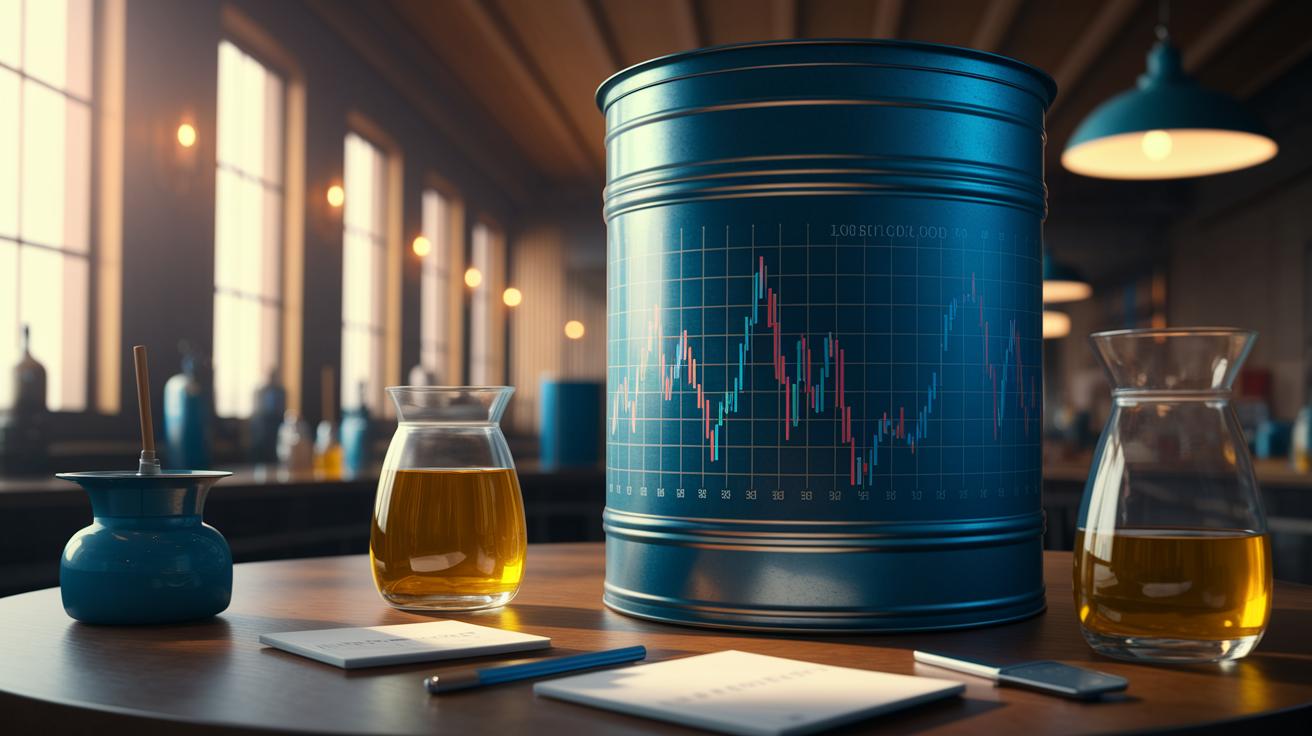
MARKET BRIEF
Top line: An interactive timeline shows West Texas Intermediate oil prices over 80 years, from post-war recovery to today's volatile market.
So what: This tool makes it easy to spot trends, dips, and surges, helping you link past events to current market moves.
What to watch:
• West Texas Intermediate prices displayed in both raw and inflation-adjusted numbers.
• A clear chart that lets you quickly see significant shifts, like a surge in the '70s or a dip in the 2000s.
• A historical view that connects past events with today's market trends.
oil historical prices chart: Inspiring Market Trends
This interactive chart shows West Texas Intermediate crude oil prices from 1946 through 2026. A simple timeline slider lets you jump through decades with ease, so you can quickly spot big price moves, whether you're checking post-war stability or recent market swings.
One useful tool is the inflation toggle. It lets you switch between the raw price figures and inflation-adjusted numbers (using the Consumer Price Index) to see what prices really look like over time. The chart starts on a logarithmic scale, which helps highlight exponential trends. Before modern tech made data visualization simple, traders had to rely on static charts that missed many quick shifts.
Advanced filters let you choose from more than 150 global crude indexes, so you can focus on specific periods or compare several indexes side by side. Plus, you can export the entire dataset in CSV format for deeper analysis. For extra visual insights, check out commodity price charts.
Oil Historical Prices Chart Data Sources & Methodology

Our price data comes from West Texas Intermediate benchmarks. We adjust prices using the Consumer Price Index (a measure of changes in consumer purchasing power). This approach gives you a clear view of what past prices mean in today’s dollars so you can compare figures accurately.
We use a log scale on the chart to highlight long-term growth. This method smooths out short-term ups and downs, making it easier for you to spot enduring trends in crude oil prices over decades.
The data updates every hour for the current month, while the complete dataset spans 80 years. This frequent update keeps you informed with the latest market moves alongside a deep historical record, making the chart a trusted tool for economic research and market analysis.
Oil Historical Prices Chart: Decade-by-Decade Trends
This interactive chart highlights key moments in oil pricing and shows how major events shaped market trends over time. You can switch between nominal prices (face value) and inflation-adjusted figures (real terms) to see the true economic impact across different eras.
- 1946–1950: In the post-war period, prices stayed relatively steady as global markets began to recover. This laid the groundwork for future demand growth.
- 1973: The OPEC embargo caused a sudden spike in prices. This event revealed how vulnerable oil-dependent economies can be.
- 1980s: Prices dropped sharply due to oversupply and shifts in global politics. The dramatic decline set a new tone for the decade.
- 1990s: Oil prices leveled off as markets calmed and mature economies adjusted after earlier shocks.
- 2000s: A commodity boom pushed prices higher, fueled by strong global demand and increased investments in emerging markets.
- 2010s: The market saw a steady recovery as producers adjusted output and new technologies improved efficiency.
- 2020s: The Covid-19 pandemic brought extreme volatility, with prices swinging widely due to changes in demand and supply chain challenges.
The chart uses a log scale to mark these key periods. This makes sudden spikes and sharp drops much clearer, especially during the commodity boom or a price collapse. Traders can easily spot turning points that signal broader shifts in the market. Plus, comparing nominal prices to inflation-adjusted values shows how purchasing power and economic pressures have influenced oil prices over the decades.
Oil Historical Prices Chart: Market Indicators & Futures

Top line: This chart blends current spot prices with oil futures data to help you gauge future market trends.
This tool goes beyond basic price tracking. It shows oil futures curves alongside today's spot prices by matching various contract dates with live figures. This setup lets you compare market expectations to real-time numbers. For more details, see the commodity futures prices section.
What to watch: Look at how the futures curves line up with historical trends to spot potential price shifts.
The platform also overlays rig count statistics and compares energy prices, including heating oil and natural gas. These additions give you a better picture of production and overall market supply. Displaying rig counts with alternative energy prices on the same timeline helps link operational data with price movements.
This multi-indicator approach creates a solid historical record, sharpening your analysis and supporting actionable trading decisions.
Oil Historical Prices Chart: Downloading Data & Integrations
We offer complete oil pricing records starting from 1946 up to today. You can easily export this data in CSV or Excel formats. Simply download the file and open it in Excel to view decades of pricing trends.
Our system also features API endpoints that update each hour during the current month. Whether you use Excel, Python, or business intelligence tools, you can automatically pull data into your analysis setup. Just check the API documentation that comes with your download instructions to begin daily data pulls.
This integration lets you bring the full dataset into your favorite third-party platforms, making it simple to run detailed research and develop your trade strategies.
Final Words
In the action, we explored an oil historical prices chart that maps decades of crude oil data with interactive tools like timeline sliders, inflation toggles, and CSV downloads.
The chart’s design helps illustrate key market cycles and integrates futures, rig counts, and global crude indexes for a complete market view. This oil historical prices chart delivers practical insights, empowering you to spot potential trade opportunities and manage risk effectively. Enjoy the clarity it brings to your market analysis.
FAQ
What does an oil historical prices chart show over different time spans like 10 years, 20 years, or 50 years?
The oil historical prices chart displays West Texas Intermediate crude oil prices over varied periods (10, 20, or 50 years) with features like a log‐scale display, inflation adjustment, and interactive date filtering.
How can I view oil historical prices by year, including a 12-month view or specific data from 2022?
The chart allows you to filter by year, offering a 12‐month view and specific data for 2022, which aids in analyzing short‐term trends and year‐to‐year price changes.
How does the chart incorporate inflation adjustments and a logarithmic scale for oil prices?
The chart provides both nominal and inflation‐adjusted views (using the Consumer Price Index) and uses a log scale to highlight exponential growth and long‐term changes in crude oil pricing.
What interactive features does the chart offer for analyzing crude oil market trends?
The chart includes custom date‐range filters, the option to blend over 150 global crude indexes, hourly updates, and a CSV download feature for thorough analysis and integration with third‐party tools.