MARKET BRIEF
Top line: A bond’s fixed rate may not reflect its true return.
So what: Understanding the difference can shift how you view risk and income in the bond market.
What to watch:
• Coupon rate: the fixed interest income promised by the bond.
• Yield: the real return that factors in both coupon payments and the bond’s current market price.
A bond’s fixed rate gives you a steady stream of income. However, bond yield shows what you actually earn when you consider price changes along with coupon payments. This difference can change your outlook on potential returns and risk. By knowing the distinction, you’re in a better position to navigate the bond market.
Direct Comparison of Bond Yields vs Interest Rates
An interest rate on a bond is the fixed coupon rate set when the bond is issued. For example, if you have a $1,000 bond that pays $100 a year, it carries a 10% rate. This rate stays the same no matter what the bond’s market price is.
Bond yield, on the other hand, is the actual return you earn in a year. It takes into account the price you pay for the bond, the coupon payments, and the amount you get back at maturity. If you buy a bond for less than its face value, your yield ends up higher than the stated coupon rate.
Here’s the difference in a nutshell:
- Interest rate: A fixed percentage based on the bond’s original face value. For instance, buying a bond at its face value and receiving a $100 coupon on a $1,000 bond confirms a 10% interest rate.
- Bond yield: A flexible measure that shows your total annual return. It factors in both the interest payments and any additional profit (or loss) from purchasing the bond at a discount or premium.
In simple terms, the interest rate is like the bond’s set fee for borrowing money, while the bond yield is the true return you earn based on market conditions. Understanding this difference is key for investors assessing debt returns and borrowing costs.
bond yields vs interest rates: A Bright Outlook
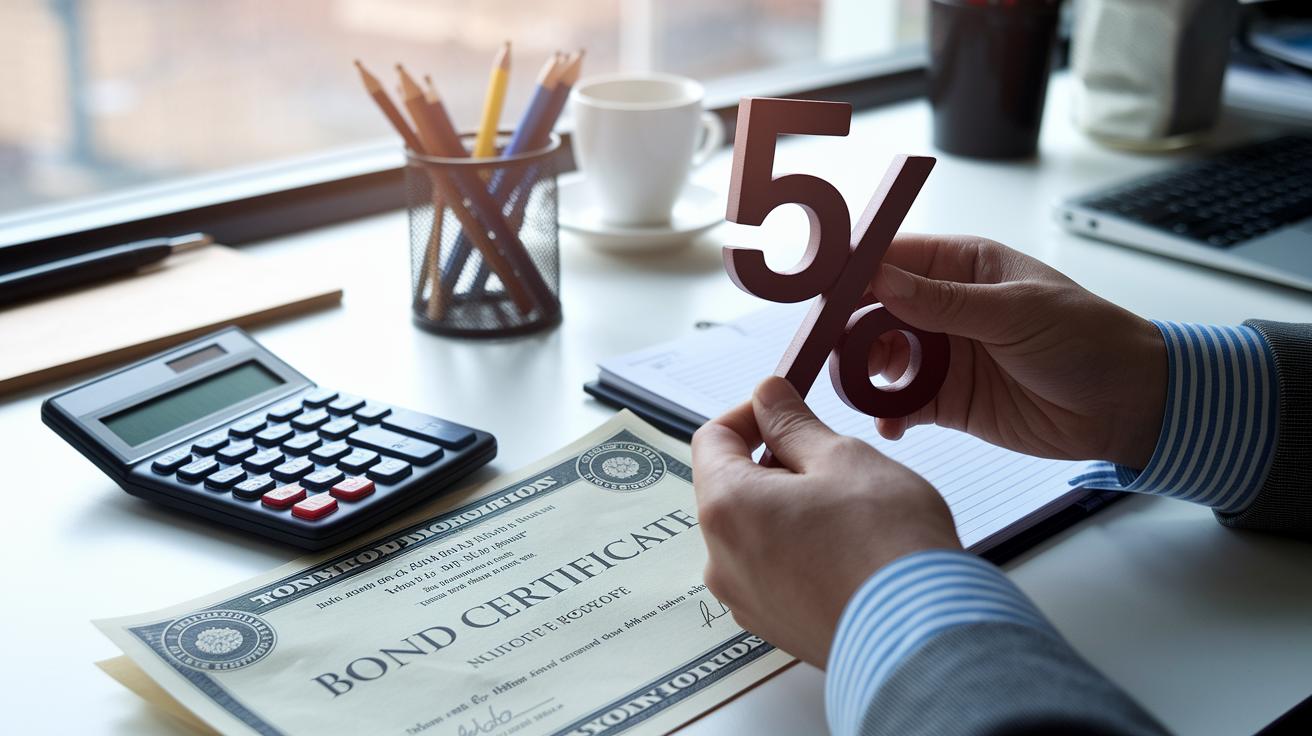
A bond's coupon rate is set when the bond is issued. It depends on the issuer’s credit quality and current benchmark rates (the standards set by central bank policies and credit ratings). For example, if a bond has a 5% coupon on a $1,000 face value, you get $50 each year regardless of later market moves.
This fixed rate gives you a dependable stream of income. Once the rate is set, your regular payment stays the same even if market prices and interest rates change. This consistency helps when you plan your finances.
Simply put, a coupon rate works like a fixed fee for borrowing money. It is decided at the start and remains steady, no matter what market chatter says.
| Factor | Impact on Coupon Rate |
|---|---|
| Issuer’s Credit Quality | Better credit can lower the needed coupon rate |
| Benchmark Rates | Higher market rates can drive a higher coupon |
Exploring Bond Yields: Types and Formulas
Bond yields show the real return you get from your bond investment. They come in different types depending on the bond's features and current market conditions. The simplest measure is the current yield. This is calculated by dividing the annual coupon payment by the bond's current price. For instance, if a bond pays $50 a year and costs $950, the current yield quickly tells you what income to expect at that price. For more details, check our guide on bond yields at BankingCorner.
Another key measure is yield to maturity (YTM). YTM looks at all future coupon payments and the difference between the bond’s purchase price and its face value. In plain terms, it calculates the internal rate of return (IRR) (the annual return you would earn) if you hold the bond until it matures. This method offers a complete picture of the bond’s return, especially when the market price is different from its face value.
For bonds that can be called early, yield to call (YTC) shows the return if the issuer redeems the bond before it reaches maturity. It uses the cash flows up until the call date rather than the full term. Finally, yield to worst (YTW) picks the lower value between YTM and YTC. This is an important figure for risk-averse investors who want to know the minimum return in tougher market conditions.
Each yield measure gives you a different view of how price shifts, call options, and reinvestment expectations impact your returns. The right yield to use depends on the bond’s design and the market setting.
| Yield Type | Definition | Calculation | When to Use |
|---|---|---|---|
| Current Yield | Annual coupon divided by market price | Coupon ÷ Price | Quick income measure |
| YTM | Return if held to maturity | IRR of all cash flows | Overall bond return |
| YTC | Return if bond is called early | IRR until call date | Analysis of callable bonds |
| YTW | Lowest possible yield | Minimum of YTM and YTC | Worst-case scenario |
Impact of Market Interest Rates on Bond Prices and Yields

Top line: Bond yields and prices work in opposite directions. When interest rates climb, bond prices drop and yields rise. When rates fall, prices bounce back and yields shrink.
So what: Rising rates make fixed coupon bonds less attractive. As prices drop, yields (calculated as the coupon divided by the lower price) jump, giving investors a quicker boost. On the flip side, lower rates lift bond prices and lower yields.
Here’s a surprising fact: if market rates rise by 2%, a discount bond’s yield can surge, unexpectedly boosting annual returns.
Premium bonds, which trade above face value, yield less than the stated coupon because you pay extra upfront. Discount bonds, buying below face value, offer yields that exceed the coupon rate as the lower purchase price helps boost returns.
Central bank moves and economic news can shift these dynamics quickly. For instance, when the economy looks strong and the central bank raises rates, you might see a steep yield curve. That means longer-term bonds now offer higher returns than shorter ones.
Key points to remember:
- When rates rise, bond prices fall and yields increase.
- Premium bonds typically yield less than their coupon rate, while discount bonds yield more.
- The yield curve shows market expectations for different timeframes.
Keep an eye on interest rate moves, they offer vital clues about where the economy may be headed and help shape your fixed-income strategy.
Step-by-Step Yield-to-Maturity Calculations for Bonds
Top line: Yield-to-maturity (YTM) tells you the annual return earned if you hold a bond until it matures by balancing its price with all future cash flows.
YTM is found by solving for the rate r in the equation: Price = (Coupon divided by (1+r) raised to the power t, summed over all periods) plus (Face value divided by (1+r) raised to the power n). In other words, it finds the r that makes today?s bond price equal to all the discounted future coupon and principal payments.
For example, take a 10-year bond with a $1,000 face value and a 6% coupon. If you purchase it for $950, solving this equation gives an approximate YTM of 6.53%.
A quick approximation method goes like this:
- First, calculate the current yield. For our example, the annual coupon is $60, so the current yield is $60 divided by $950, which is about 6.32%.
- Next, add the annual gain from buying the bond at a discount. Compute this by subtracting the purchase price from the face value, dividing by the number of years (i.e., ($1,000 – $950) divided by 10 equals $5 per year). Then, divide this $5 by the average of the face and purchase prices (($1,000 + $950) divided by 2 equals $975), which gives roughly 0.51%.
- Adding these two figures (6.32% and 0.51%) gives an approximate YTM of 6.83%. This approximation is close to the more precise 6.53% derived from solving the full equation.
So what: Using this shortcut helps traders quickly gauge the bond’s return and assess if the price discount is worth the investment. For the complete yield formula details, check out "bond yields formula" at https://bankingcorner.com?p=425.
Implications of Bond Yields vs Interest Rates for Investors
Top line: When you assess bonds, focus on yield to capture true performance rather than just the coupon rate.
So what: Real returns and risk management hinge on how market interest rates shape bond prices and yields.
Investors build portfolios around yield because it reflects the bond’s actual return, including purchase price variations, fees, and market conditions. For example, buying a bond at a discount can boost your yield well above the coupon rate, giving you a clearer picture of annual returns.
Consider strategies like laddering maturities, which spreads investments across different time frames to reduce the impact of rate hikes. Adjusting duration also matters. Shorter durations usually mean less sensitivity to rising rates, while longer ones might benefit when rates drop. And don’t overlook credit quality, higher-rated bonds might offer lower yields but they add a layer of safety during volatile times.
As inflation looms and central banks tweak rates, yield becomes a more responsive measure of return. In markets where inflation pushes bond prices down, yields tend to climb, serving as a cushion. For instance, in India, with a bond market near $1.8 trillion and annual growth around 14%, these dynamics are clearly evident.
Key strategies:
- Ladder maturities to spread risk.
- Adjust duration based on rate movements.
- Prioritize credit quality for stability.
Final Words
In the action, we broke down the critical differences between bond interest rates and bond yields, clarifying key metrics like coupon rates, yield-to-maturity, and their market impacts. We outlined how rate changes drive bond prices and demonstrated step-by-step calculations. This guide puts complex concepts in plain language, helping you weigh the benefits of yield analysis against fixed interest. With a solid understanding of bond yields vs interest rates, you can approach market moves with renewed confidence and a clearer path for smart trade decisions.
FAQ
Q: How do bond yields compare to interest rates and does this differ for Treasuries?
A: Bond yields represent the actual return based on purchase price and total earnings, while interest rates show the fixed coupon set at issuance. Treasury yields are a government debt version reflecting similar dynamics.
Q: Why are bond prices and interest rates inversely related?
A: Bond prices drop when market interest rates rise because new bonds offer higher returns, making older bonds less attractive. This inverse relation forces yields on older bonds to increase to remain competitive.
Q: What is a bond yield vs interest rate calculator used for?
A: A bond yield vs interest rate calculator estimates returns on bonds by comparing the coupon rate, current market price, and face value to match them against prevailing interest rates.
Q: How are bond yields affected when they rise and what does this mean?
A: Rising bond yields indicate falling bond prices and higher investor return expectations. They adjust in response to changes in market interest rates, revealing shifts in a bond’s profitability.
Q: Should I buy bonds when interest rates are high?
A: Buying bonds during high interest rate periods may offer increased yields, yet they become more sensitive to rate declines. This strategy is best for investors who can hold bonds long-term despite potential price volatility.
Q: Is bond yield directly proportional to the coupon interest rate?
A: Bond yield is not directly proportional to the coupon rate because yield considers the purchase price and total returns, while the coupon rate remains fixed at the bond’s face value.
Q: Do high yield bonds perform well when interest rates drop?
A: High yield bonds can benefit from falling interest rates as lower borrowing costs enhance relative yields. Yet, they still carry higher credit risks compared to investment-grade bonds.