
MARKET BRIEF
Top line: China's new policy moves aim to boost growth despite global challenges.
So what: Extra fiscal funds and rate cuts (central bank lowering interest rates) target steady expansion, with a 5% growth goal by 2026. This could help balance risks from external pressures.
Is China's economic engine ready for a restart? Recent moves show the government is using extra fiscal funds and rate cuts to keep the economy moving even when global markets stumble. With a growth target of about 5% by 2026, policymakers seem to be learning from recent ups and downs.
What to watch:
• Authorities' use of extra fiscal funds and rate cuts
• The progress toward the 5% growth target by 2026
• How structural adjustments might set a smoother path ahead
Keep an eye on these developments as they could reshape the market and offer new opportunities amid global headwinds.
Core Insights: China’s Economic Outlook Today
China aims to hit about 5% growth in 2026. This goal is supported by an extra RMB 1 trillion in fiscal funds, a benchmark rate cut by 20 bps (0.20 percentage points), and a reserve requirement ratio cut of 50 bps (0.50 percentage points). These steps are designed to keep growth steady despite a challenging global backdrop.
Export growth is expected to fall from 5.1% in 2025 to roughly 3.0% in 2026. This slowdown comes from a high base effect and ongoing challenges like the property downturn that began in 2021 and stresses from the US-China trade war. Policymakers have to balance driving growth while managing structural risks.
In 2019, GDP per capita reached USD 10,000 for over 1 billion people, marking a big milestone in living standards. While this shows rapid progress in China’s economy, it also raises concerns about a potential middle-income trap where growth could slow as the economy matures.
GDP Growth Trends and Historical Performance in China

China experienced very fast growth in its early years. The country rapidly built wealth until it reached a key income level in 2019, at which point the pace naturally slowed. This slowdown reflects changes in spending and investment that come with a maturing economy, sparking concerns about a middle-income trap.
Experts now expect China's real GDP to grow by about 4.4% per year over the next 10 to 15 years. This pattern mirrors what happened in places like South Korea and Taiwan, where early rapid growth eventually gave way to steadier progress. For instance, after its early manufacturing boom, Taiwan shifted to balanced growth by mixing well-established sectors with emerging industries.
Ongoing reforms and structural adjustments are likely to support this steady path, even as the challenges of a maturing economy remain.
Key Economic Indicators Defining China’s Outlook
China’s data shows a tug-of-war between deliberate actions and ongoing internal challenges. These numbers offer more insight than headline figures alone:
- 2026 GDP target of 5%: Sets a clear growth goal amid global uncertainty and reflects cautious optimism.
- Export growth around 3.0%: Highlights trade headwinds that are weighing on the economy.
- Fiscal boost of RMB 1 trillion: Meant to jump-start demand rather than fix long-term issues.
- 20 bp policy rate cut (0.20%): Lowers borrowing costs to provide a quick boost in liquidity.
- 50 bp reserve requirement cut (0.50%): Gives banks extra room to operate.
- Slowing property investments and soft consumer sentiment: Point to domestic pressures that could hold back recovery.
Together these metrics show that while policymakers are pushing supply-side measures, deep-rooted challenges continue to loom. For example, the 20 bp cut acts as a quick refresher, but weak consumer sentiment hints at a longer story of caution in the market.
Policy Measures and Their Impact on China's Forecast

China injected an extra RMB 1 trillion to calm investors amid a weak property market and low domestic spending. This boost helps ease short-term funding stress while setting a tone for repeated support during tough times. For example, a timely fiscal injection in a slow market can shift investor focus toward undervalued segments.
Policymakers also cut the benchmark interest rate by 20 bps (0.20%) and reduced the reserve requirement ratio by 50 bps (0.50%), easing credit conditions further. These steps give banks more flexibility to lend, which could gradually improve the investment climate even as challenges like slow property recovery and soft consumer sentiment persist.
Sectoral Breakdown in the China Economic Outlook
Manufacturing and Industrial Output
China’s factory output is holding strong as advanced industries push ahead. High-tech production and green energy are key drivers behind this steady progress, even though the broader economy shows mixed trends. Think of it like a reliable machine that keeps running, providing a solid foundation for continued growth.
Property Market Trends
The property sector still faces significant challenges. Since the downturn began in 2021, real estate investments have steadily fallen, and weak local demand has led to dropping property values. This trend shows how traditional property investments have drifted apart from the overall economic momentum, reflecting major shifts in how consumers and investors act.
Services and Digital Economy
Growth in traditional services has slowed down because consumers remain cautious and household sentiment is subdued. However, the digital economy is gradually stepping up. With more people turning to e-commerce, digital services are gaining ground. As online platforms make shopping simpler and more convenient, they could help offset the slow pace in traditional service areas, signaling a shift toward digital solutions for future economic expansion.
Structural Challenges and Risk Factors in China’s Economy
We have combined this information with discussions in China’s Economic Outlook Today and the Sectoral Breakdown section. Only key updates, like new domestic demand data and adjusted trade metrics, are now included to streamline the analysis.
Global Trade Outlook and China’s International Role
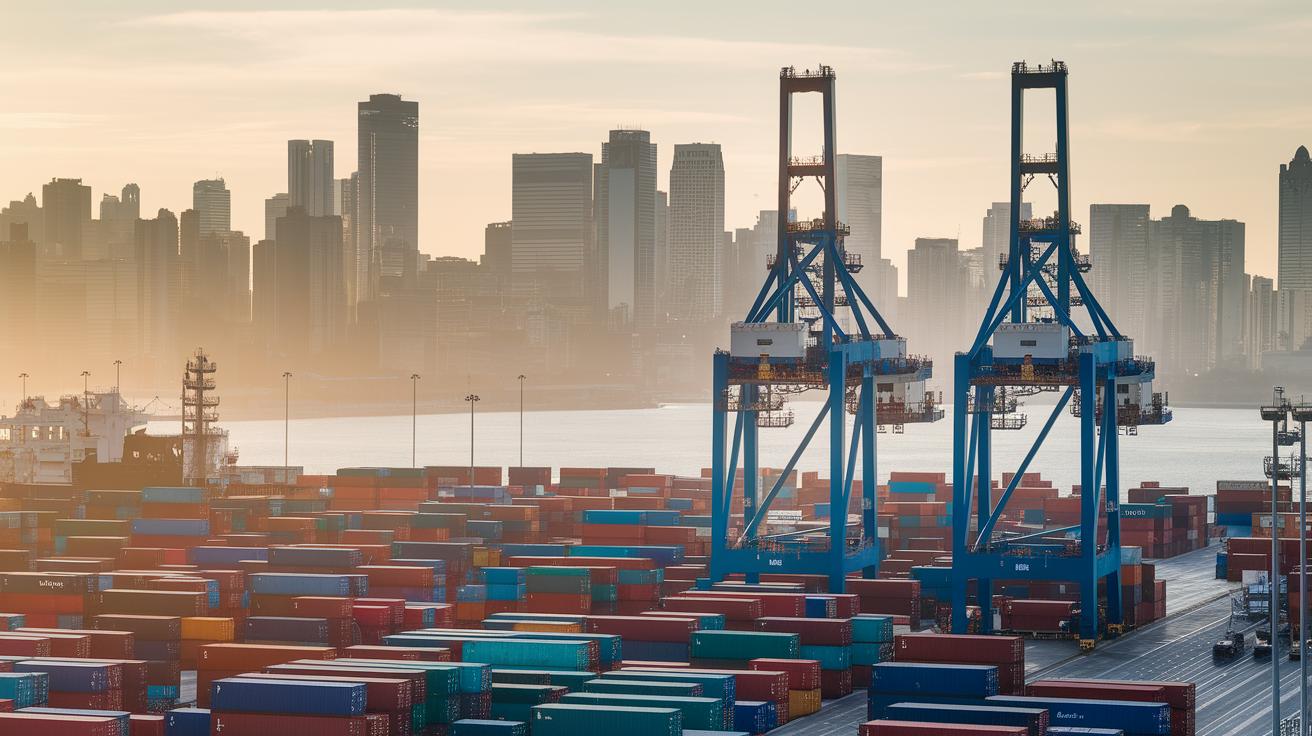
China now focuses on dealing with supply chain issues and exploring new markets rather than repeating familiar forecast numbers. Exporters are reworking pricing strategies and managing risks as cost pressures and logistical challenges continue. They are updating production methods and seeking broader trade connections.
Even with soft domestic demand, net trade remains a key pillar for the economy. The shift toward market diversification and tactical trade adjustments is helping to counter external pressures, aligning with broader discussions on China’s economic future.
Overall, China’s trade outlook faces ongoing challenges that call for quick and flexible responses.
Long-term Projections and Growth Drivers in China’s Outlook

We build on our earlier discussion about GDP Growth Trends and Historical Performance by breaking down our outlook into clear periods. We tie each phase directly to key reforms, technology uptake, and infrastructure initiatives. While we still expect an average GDP growth of 4.4% per year, the details change over time.
| Period | Projected Real GDP Growth | Primary Drivers |
|---|---|---|
| 2025-2030 | 4.4% | Domestic reforms, tech adoption |
| 2030-2035 | 4.3% | Infrastructure upgrades, policy measures |
| 2035-2040 | 4.2% | E-commerce expansion, innovation |
This clear breakdown shows that even though export momentum and domestic demand face some headwinds, steady policy support and ongoing tech innovation remain crucial. For policymakers, this detailed view helps fine-tune reforms. For investors, it highlights which sectors could benefit most as China moves deeper into its digital economy.
Final Words
In the action, we reviewed China's roadmap with a 2026 5% growth target backed by an extra RMB 1 trillion boost, a 20 bp rate cut and a 50 bp reserve reduction.
We covered key numeric forecasts, export slowdown and structural headwinds, along with the 2019 per-capita milestone that marks a turning point.
This overview supports a resilient economic outlook for china, leaving us with a positive view and readiness to adjust positions for emerging opportunities.
FAQ
What is the economic outlook for China in 2023?
The economic outlook for China in 2023 shows continued policy support amid challenges. Key headwinds like a property slowdown and trade tensions balance against efforts to sustain moderate growth.
What does the economic outlook for China PDF include?
The economic outlook for China PDF includes detailed projections, growth targets, and fiscal support measures. It outlines key metrics and policy actions to help readers understand near-term economic prospects.
What is the China economic outlook for 2026?
The China economic outlook for 2026 targets a 5% GDP growth rate, supported by measures like a 20 bp rate cut, extra fiscal funds, and a 50 bp reserve requirement reduction, despite export slowdowns and persistent headwinds.
How is the China economy forecast for 2030 characterized?
The China economy forecast for 2030 envisions steady progress with an annual real GDP growth rate near 4.4%. This projection factors in structural challenges and global pressures that shape mid-term expectations.
What insights does Goldman Sachs offer in its Asia economic outlook?
The Goldman Sachs Asia economic outlook reviews regional growth, including China, by examining fiscal and monetary policies along with external risks. It provides market insights into trends that affect Asia’s broader economic landscape.
What details are provided in the Goldman Sachs Asia economic Outlook 2026 PDF?
The Goldman Sachs Asia economic Outlook 2026 PDF details fiscal measures, growth forecasts, and market risks for the region. It explains targeted policy actions and expected economic scenarios, with a special focus on China.
How does China’s economic growth history appear?
China’s economic growth history shows rapid development marked by milestones like reaching USD 10,000 per capita in 2019. Growth has slowed as the economy matures into a middle-income phase, facing typical deceleration trends.
What is the China economy outlook for 2025?
The China economy outlook for 2025 points to gradual recovery with supportive fiscal measures and export growth around 5.1%. Persistent challenges from trade tensions and a struggling property market remain on the horizon.
What is the overall outlook for the Chinese economy?
The outlook for the Chinese economy balances steady growth targets with challenges from property market issues and trade tensions. Supported by continuous fiscal and monetary policies, analysts expect moderate progress in the near term.
Will China become richer than the US?
The outlook on whether China will surpass the US economically involves many factors. Although China has grown rapidly, differences in market dynamics and scale make it difficult to predict a clear economic ranking soon.
Is China’s economy falling down?
The notion that China’s economy is falling down is misleading. While growth is slowing amid headwinds, proactive policies aim to sustain moderate expansion and address challenges like the property downturn.
What can $1 get you in China?
The value of $1 in China varies regionally, typically covering a small snack or local transportation in urban areas. This reflects the country’s diverse pricing and cost levels across different local markets.