MARKET BRIEF
Top line: Global markets are swinging today, mixing risk with opportunity.
So what: Despite lower U.S. indexes and a cooling bond market, steady job growth and low consumer inflation point to hidden chances for profit.
What to watch:
• Major U.S. index dips vs. economic resilience
• Rising value stocks showing promise amid market volatility
• Bond market cooling while jobs continue to add
Global financial markets can look unpredictable on a daily basis. Even though key U.S. indexes have dropped and bonds are losing some steam, the consistent rise in job numbers and kept-low consumer prices suggest that some parts of the market remain strong. Rising value stocks and solid economic statistics remind us that shifts in the market can create pockets of opportunity for the smart, active investor. This analysis lays out the main factors influencing global markets today and highlights why you might want to stay ready for potential moves.
Current State of Global Financial Markets and Key Risks
U.S. markets faced clear losses today. The Nasdaq Composite fell 2.10%, the S&P 500 slipped 1.39%, and the Dow Jones dropped 1.23%. Mid-cap stocks were not immune; the S&P MidCap 400 declined 0.66%. Value and defensive stocks outperformed growth stocks, with the Russell 1000 Value Index up by 11 percentage points year-to-date. This all highlights the current volatility as investors track daily moves.
Key economic stats add important context. In January, employers added 130,000 jobs, and the unemployment rate edged down from 4.4% to 4.3%. Job gains varied across sectors. Meanwhile, consumer inflation remains low. The U.S. Consumer Price Index (CPI) rose 0.2% month-over-month and 2.4% year-over-year, helped by lower energy prices. Core CPI, which excludes food and energy, increased by 0.3%.
In the bond market, the 10-year Treasury yield hit a new year-to-date low amid sell-offs in technology stocks. This drop reflects broader worries about market stability and increased risk.
For more details on the global financial markets, check out this resource on global markets definition. These factors remind investors to keep a close eye on market swings and economic stability as they plan their next moves.
Regional Performance in Global Financial Markets
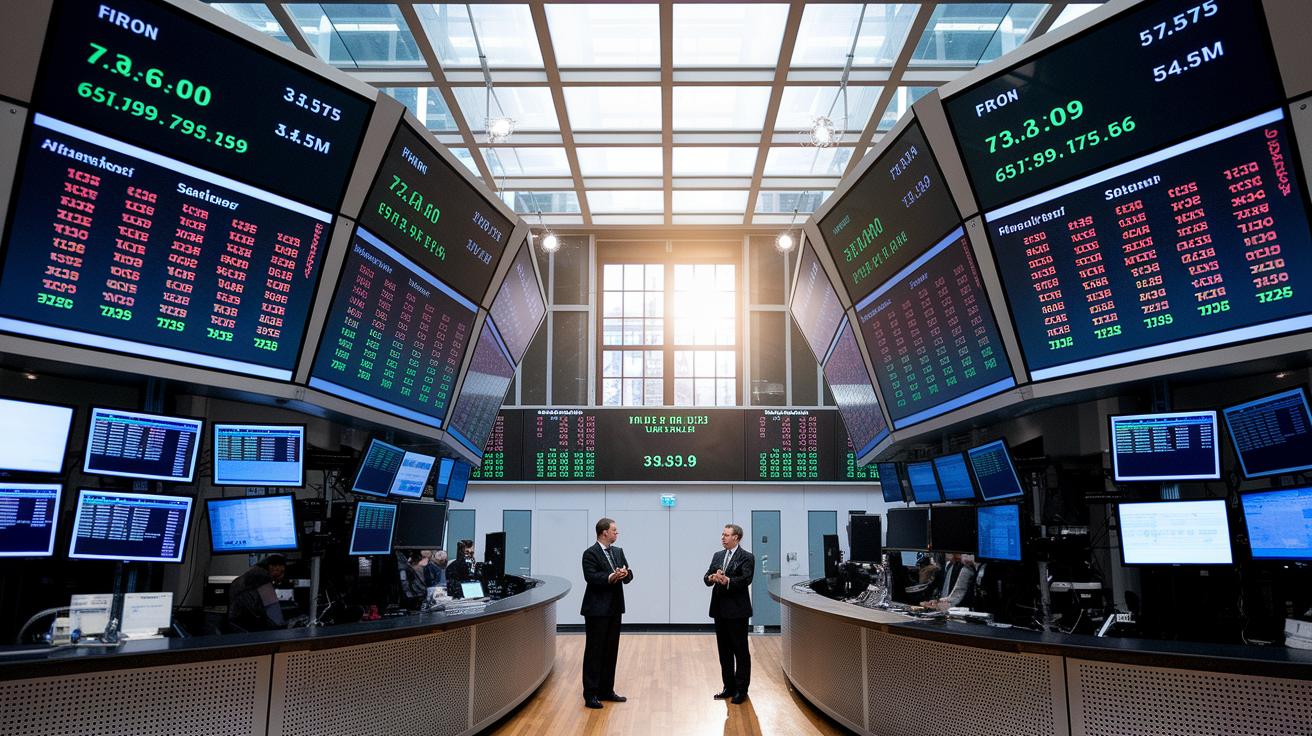
Top line: European stocks showed modest gains overall, while Italy lagged behind as Asia outpaced with strong moves and easing inflation data.
So what: Watch for rising costs in Europe and robust momentum in Asia, which could steer near-term market activity.
European markets sent mixed signals this session. The STOXX Europe 600 edged up 0.09% in local currency. Germany’s DAX climbed 0.78% and France’s CAC 40 rose 0.46%. However, Italy’s FTSE MIB dropped 0.97%, and the UK’s FTSE 100 gained 0.74%. Eurozone Q4 GDP increased 0.3% quarter-over-quarter (1.5% year-over-year), with Spain leading at 0.8%. Employment in the region grew by 0.2%, although Germany saw a decline.
Looking closer at costs in Europe, Germany’s wholesale prices jumped 1.2% year-over-year. This rise was led by higher prices in metals, nonferrous ores, food, and beverages. In January alone, wholesale prices rose sharply, pushing energy and raw material costs above normal levels. This trend may hint at cost-push inflation that could impact profit margins.
In Asia, the market story was more upbeat. Japan’s Nikkei 225 surged 4.96%, and the TOPIX advanced 3.24%, even as 10-year Japanese Government Bond yields stayed close to 1.23%. Over in China, the CSI 300 and Shanghai Composite registered gains of 0.39% and 0.43% respectively. With consumer inflation easing to 0.2% year-over-year and the Producer Price Index falling 1.4%, the region is showing signs of cooling cost pressures.
Global Financial Markets: Brimming with Investment Promise
Top line: Emerging market inflation and new regulations are shaking up capital flows and creating fresh opportunities.
So what: Traders need to keep an eye on policy changes and shifting price trends as volatility opens both risks and rewards.
What to watch:
- Argentina: Consumer prices jumped 2.9% month-over-month and 32.4% year-over-year in January. Disputes over inflation reporting methods and recent high-profile resignations at the national statistics office are fueling uncertainty.
- Brazil: Prices increased 0.33% over the past month and 4.44% year-over-year. Rising transport and health-care costs are putting pressure on inflation, highlighting the market’s sensitivity to global liquidity shifts.
In Argentina, disagreements over how inflation is measured are stirring market jitters. With key officials stepping down, investors are questioning the accuracy of the data and adjusting their strategies accordingly.
In Brazil, the inflation picture is more stable yet notable. Higher costs in essential areas like transport and health care are nudging prices upward. This trend shows how local markets react to both domestic pressures and global investor sentiment.
Investors are increasingly drawn to emerging markets despite these regulatory challenges. New oversight efforts aim to boost transparency and manage risks, making the current environment one to watch closely.
Bond Yields and Currency Trends in Global Financial Markets

Bond yields push forex movements by setting benchmark interest rates and hinting at shifts in central bank policies. When yields change, traders quickly adjust their currency bets to seek better risk and reward. For instance, if a country’s yield drops from 2.5% to 2.0%, its currency tends to lose strength relative to a peer with steady rates. In short, when yields decline, money chases higher returns.
Central bank actions now add extra uncertainty to the forex scene. In the U.S., investor caution drives market moves, while Japan’s proactive measures keep its yields steady. These differing strategies not only affect domestic bonds but also influence currency trends across borders.
A widening yield curve gap often makes traders shift funds from lower-return markets to those offering more stable returns. This reallocation can intensify moves in the forex market.
Key observations:
- U.S. yield drops can weaken its currency compared to peers with stable yields.
- Active policies in countries like Japan create a different forex picture.
- Diverging central bank tactics boost uncertainty, leading traders to watch yield gaps closely.
| Element | Impact on Forex |
|---|---|
| Falling Benchmarks | May reduce currency appeal as returns diminish. |
| Stable Yields via Policy | Can bolster currency strength relative to peers. |
| Divergent Central Strategies | Increase uncertainty and drive capital shifts. |
Commodity Price Movements Shaping Global Financial Markets
European manufacturers are feeling the squeeze as rising prices for metals, nonferrous ores, food, and beverages push up input costs. In Germany, wholesale prices jumped 1.2% over the past year, which is putting pressure on manufacturing expenses and adding stress to supply chains.
Higher commodity costs chop profit margins and reduce market liquidity. For example, metals were trading at least 20% below their current levels during last year’s slump before reaching record highs.
In Asia, rising nonferrous and energy prices are also tightening global supply chains, influencing liquidity across markets.
Traders should factor in these global commodity trends along with European cost pressures when analyzing market liquidity and inflation.
Policy Shifts and Regulatory Impact on Global Financial Markets

Recent rules are shifting global market confidence and the flow of capital. In the United States, regulators approved a general license that lets established firms trade Venezuelan oil. This move gives energy players clear guidance and shows a balanced approach to risk and opportunity. At the same time, new export rules for AI chips (advanced computer parts) have been set to protect the country’s tech leadership. New York City also revised its paid-leave policies to help companies manage rising operating costs.
In Japan, the government will use other income sources and cut subsidies to fund a temporary food-tax break. This step aims to ease costs for consumers without putting extra pressure on the national budget. Over in the United Kingdom, ongoing political uncertainty and debates over leadership have lowered investor confidence. These various policy changes in energy, technology, labor, and spending reveal a complicated outlook for regulators worldwide.
Together, these actions show how different government moves are affecting international trade and investment flows. Market players now need to reassess risks and opportunities in our connected global economy as firms and investors adapt to these evolving conditions.
Investment Strategies within Global Financial Markets
Top line: Diversification is key when facing unpredictable markets. So what: A balanced mix across assets and regions can help smooth out volatility.
In today’s market, stocks can swing, bonds shift, and inflation climbs. Historical data shows that strategies focused on value often hold up better during rough cycles. Diversifying across different asset classes can help build a more resilient portfolio.
Consider spreading your investments among:
- Stocks for both growth and income.
- Government and corporate bonds to balance risk and capture yields.
- Currencies that benefit from supportive central-bank policies.
- Commodities to offer protection from rising prices and provide steady returns.
Think about weighing your investments by country and sector, using indicators like GDP growth and market volatility. For instance, focusing on regions with steady growth and industries that don’t experience wild price swings can lower your overall risk.
Regular monitoring is essential. Adjust your mix using risk tools like VAR (Value at Risk, which estimates potential losses) and the Sharpe ratio (measuring returns relative to risk). Watching changes in the yield curve and credit spreads can signal shifts in market sentiment and prompt strategic reallocations.
Adding assets that hedge against inflation along with a dose of commodities can further protect your portfolio’s purchasing power. This approach lets you take advantage of short-term market moves while keeping a steady eye on the long run.
Final Words
In the action, this piece broke down key trends across global financial markets. We examined equity volatility, regional shifts, emerging market developments, and the interplay of bond yields with policy changes.
We also highlighted how commodity prices and new regulatory moves shape market stability. The insights offered practical trade ideas and risk management tactics to help sharpen your strategy. Embrace these clear, market-ready observations as you review your next move with confidence.