
MARKET BRIEF
Top line: Global stock markets may be growing beyond old boundaries.
So what: Quick shifts in benchmarks like the S&P 500 (S&P 500, US) and FTSE 100 (FTSE 100, UK) could change how you view market trends.
The global stock market chart is an interactive tool that displays major indexes. Think of it like your car’s dashboard; it lights up when something changes. This tool makes it easier to spot rapid moves in the market. You can see surges and dips at a glance, giving you real-time insights that challenge long-held beliefs about equity growth.
global stock markets chart: Dynamic Growth Soars

This chart offers an interactive, real-time snapshot of global equity indexes. The visuals are clean with clear labels and tooltips, so you instantly spot market shifts, much like your car dashboard lighting up when an alert appears.
It brings together key benchmarks such as the S&P 500 (S&P 500, US), FTSE 100 (FTSE 100, UK), Nikkei 225 (Nikkei 225, Japan), DAX (DAX, Germany), and Hang Seng (Hang Seng, Hong Kong) into one cohesive view. For example, if the S&P 500 experiences a quick surge, you might see a tooltip noting a 1.5% gain, helping you understand market momentum immediately. For more insights, check out the Global Capital Markets page.
You can also tailor your display by filtering for different regions like the Americas, EMEA, or APAC and choosing various time frames such as 1 day, 5 days, 1 month, 1 year, or 5 years. This flexibility is ideal whether you’re tracking short-term moves or analyzing long-term trends.
World Equity Indexes Chart Analysis
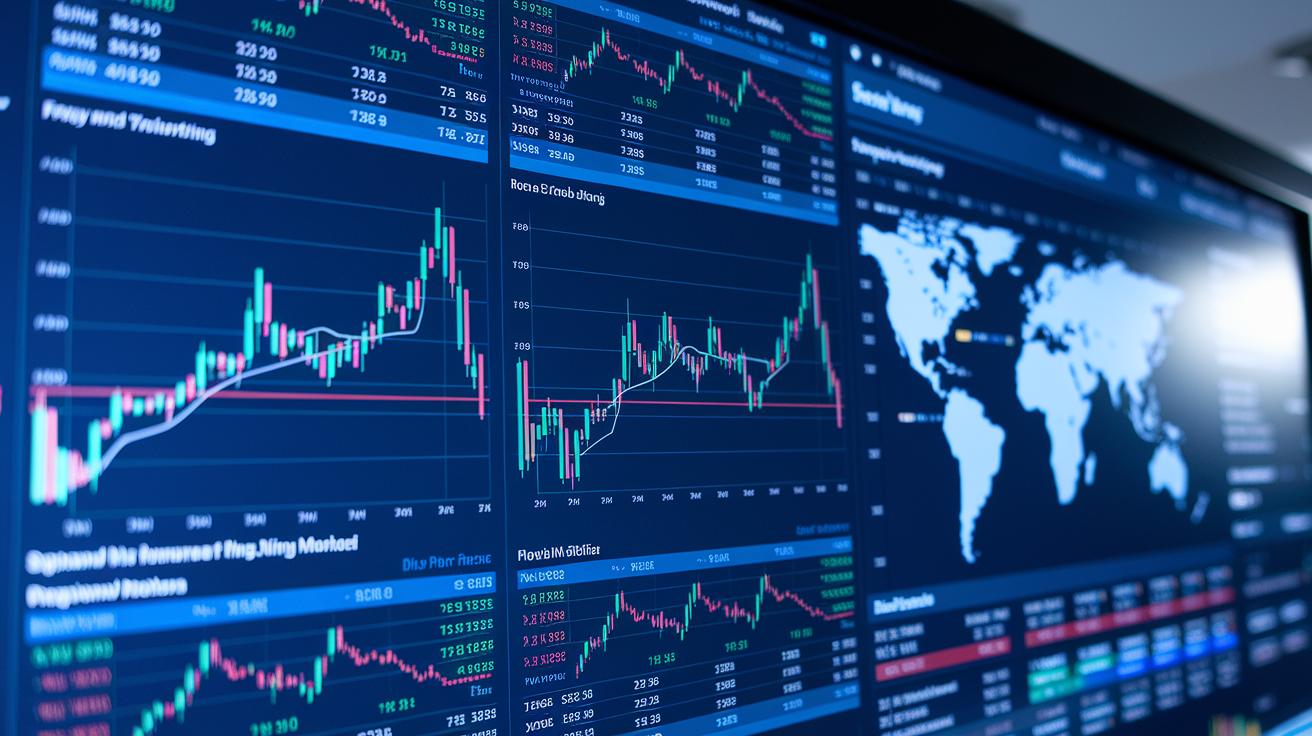
The interactive charts show top global stock benchmarks with daily performance, YTD returns, and volatility metrics side by side. You get real-time details that let you quickly see international market trends. When you hover over any region, current values, percentage changes, and trading volumes pop up. This feature helps you pinpoint the top five gainers or losers, giving you a clear window into market momentum.
The design is simple and insightful. Grouped regional tickers let you compare market behavior across continents easily. Each line graph reflects shifts in market performance so you can catch changes in investor sentiment. With all key metrics in one view, the tool makes it easier to understand what drives market moves and where opportunities might be hiding.
Quick Checklist:
- Verify that each benchmark accurately matches its region.
- Use hover details for checking real-time percentage changes.
- Monitor daily and YTD returns to gauge momentum.
- Review volatility metrics to assess market risk.
- Focus on the top five movers for a fast global equities overview.
Emerging vs. Developed Markets Chart Breakdown

This interactive chart lets you pick regional performance clearly. You can choose indexes for emerging markets, like MSCI Emerging Markets, Bovespa, and Sensex, or switch over to developed markets using benchmarks such as the S&P 500, FTSE 100, and DAX. The chart updates over weekly and monthly periods so you can spot trends quickly. For example, emerging markets might show more volatility, while developed markets tend to give steadier returns.
The interface uses simple color cues to make things easy. Developed-market indexes appear in green, and emerging-market indexes show in orange. Think of it like a green signal for steady performance versus a flashing orange sign for quick changes. This color system, along with the relative strength lines, helps you see shifts in momentum across different markets.
Key strategic insights:
- Monitor momentum: Compare the volatility between emerging and developed markets.
- Adjust your approach: Look at both weekly and monthly returns for detailed timing.
- Use relative strength: Quickly spot which sectors are outperforming within each market.
Historical Chart Visualization of Global Stock Indices

This charting tool lets you quickly track global stock indices over 1-year, 5-year, and 10-year periods. The easy-to-use time slider switches between recent trends and long-term cycles at the click of a button. For example, moving from a one-year view to a decade-long view immediately shows whether a market has grown steadily or experienced long periods of ups and downs. This helps you easily spot the start of bull markets and recognize emerging trends.
Key economic events, like the 2008 financial crisis and the COVID-19 downturn, are marked directly on the chart. Shaded regions highlight times of market stress, turning abstract numbers into a clear story that links market dips to their economic causes.
The tool also displays important trendlines such as compound annual growth rates (CAGR) and maximum drawdowns (the biggest drop from a peak) across different time frames. This allows you to quickly assess market resilience and adjust your strategy based on historical performance.
| Time Frame | Key Performance Metrics |
|---|---|
| 1Y | CAGR, Max Drawdown |
| 5Y | CAGR, Max Drawdown |
| 10Y | CAGR, Max Drawdown |
Customizing Your Global Markets Chart: Tools & Filters

Upgrade your market view by adding overlay tools like moving averages, RSI (Relative Strength Index), and Bollinger Bands. You can switch easily between line, candlestick, or area charts. A built-in tool even lets you display up to 4 indexes at once, making cross-market checks a breeze. For more details, see the Global Markets Definition here: Global Markets Definition. These options give you a dashboard that adapts to your trading style.
- Pick your preferred chart type.
- Add key technical tools like moving averages or Bollinger Bands.
- Use the comparison tool to display extra indexes so you can see key regional or sector benchmarks.
- Adjust the time frame and region settings to focus on the market conditions that matter to you.
- Save your setup as a custom dashboard for quick access when market moves speed up.
Once your custom dashboard is ready, you can save all your settings, region, time frame, and indicators, together. This not only locks in your layout but lets you share it with colleagues or across your devices. Customizing your charts makes it easy to keep up with shifting market trends and speeds up your analysis, ensuring you always have a clear view of global market trends.
Charting Global Economic Indicators alongside Stocks

The platform lets you add economic indicators directly on your stock charts. You can overlay key metrics like global PMI (a gauge of economic activity), the inflation rate, and central bank rate changes all on the same chart. This setup works like a weather map for the economy where each indicator gives a quick update on the market environment.
Once you set up these overlays, a heatmap appears right below the stock lines to show shifts in important economic data across regions. A calendar widget also highlights upcoming data releases so you never miss key events. This clear visual link between macroeconomic signals and stock trends can help you understand potential market moves. In short, you turn raw numbers into a useful picture of risk and growth, key for time-sensitive trading decisions.
Best practices for combining economic and market visuals:
- Use overlay settings to adjust indicator transparency so both data sets stay clear.
- Update the heatmap and calendar widget regularly to reflect the latest economic data.
- Cross-reference changes in indicators with stock momentum for a more precise risk look.
Strategic Chart Dashboards for International Investments

Top line: Prebuilt dashboards combine essential charts and graphs to help you track global indexes, sectors, and market trends with ease.
These dashboards mix charts for global indexes, sector performance, volume trends, and risk-reward scatter plots. This ready-made solution simplifies portfolio decisions so you can quickly spot shifts in international markets. Whether you're rotating equities or studying cross-regional allocations, there's a template that fits your approach. Start with one that aligns with your investment style and then adjust it to better monitor your international figures.
What to watch:
- Global Rotation – Ideal for rebalancing portfolios based on changing global trends.
- Emerging Focus – Helps you identify opportunities in emerging markets, known for higher volatility and growth potential.
- Volatility Watch – Best for keeping track of market fluctuations and assessing risk exposure across regions.
- Sector Spread – Useful for comparing performance across different industries and balancing your exposure.
After you select a template, you can adjust key settings to match your investment goals. Customize technical indicators, change weighting factors, and set filters to highlight performance differences. This tailored view clears up cross-market dynamics and boosts decision-making and real-time execution.
Final Words
In the action, our article broke down an interactive overview ranging from chart features and index selection to filter options and historical visualizations. It highlighted key elements like emerging versus developed market nuances and strategic dashboard configuration.
We showed how to use a global stock markets chart to swiftly interpret international market trends and real-time data. The insights aim to boost your trading confidence and decision-making. Keep exploring and refining your approach with these actionable tools.
FAQ
Q: What do live global stock market charts show?
A: The live global stock market charts offer real-time visual updates that display major indices like the S&P 500 and FTSE 100, helping you track current market movements and make timely decisions.
Q: What historical data can I view on global stock market charts?
A: The historical data options provide views ranging from one year to the last 10 years, allowing you to analyze long-term trends, market cycles, and major events annotated on the charts.
Q: What are the top 10 stock markets in the world?
A: The top 10 stock markets in the world are determined by metrics like market capitalization and liquidity, including major exchanges such as New York, London, and Tokyo, offering key benchmarks for global equity performance.
Q: How does the global stock market by country work?
A: The global stock market by country view breaks down market data by nation, enabling you to quickly assess and compare the performance, size, and trends of individual country markets.
Q: What does an all world stock index include?
A: An all world stock index aggregates major national indices into one comprehensive overview, giving you a broad picture of global equity performance while helping to gauge worldwide market trends.