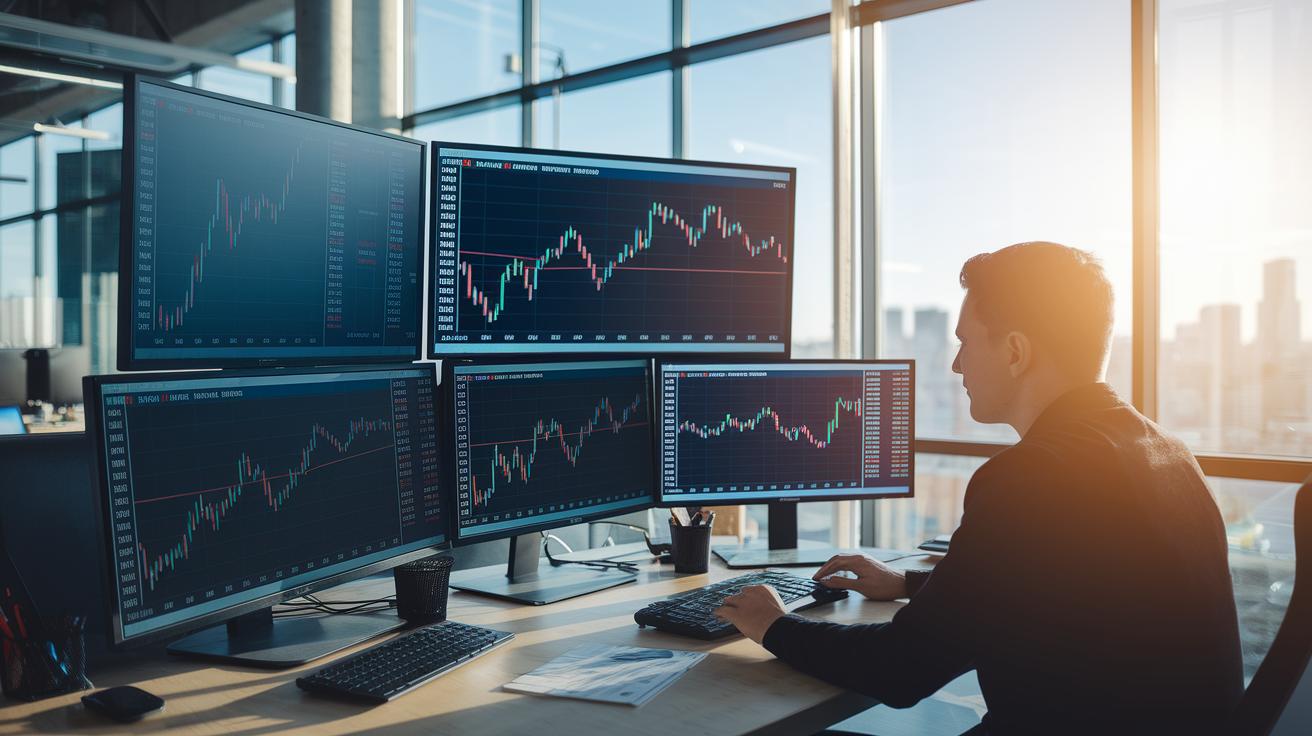
MARKET BRIEF: Forex Trading for Every Budget
Top line: The forex market unlocks profit opportunities for traders of any size, thanks to its nonstop global currency action.
So what: Even traders with a small investment can take advantage of rapid price swings using simple strategies that align with key trading sessions.
The forex market is often called a goldmine because it never sleeps. Currencies are traded around the clock, which means there’s always a chance to catch a move that fits your trading style. You don’t need a big bag of cash to get started; even modest positions can yield results when price changes hit fast.
In this brief, we break down essential trading strategies, pinpoint the most active sessions, and share straightforward techniques to help you identify winning trades. Get set to harness the power of forex for consistent profit opportunities.
Getting Started with Forex Trading

Forex trading means buying one currency while selling another. It offers a chance for investors, whether large institutions or individual traders, to profit by helping them act on global economic changes.
The market runs 24 hours a day, five days a week. Key centers in New York, London, Tokyo, and Sydney keep trade flowing. For instance, the European session (07:00 to 16:00 GMT) is busy, while the U.S. session (12:00 to 21:00 GMT) often sees larger price swings. This nonstop schedule lets you trade whenever it suits you.
You can choose different trading styles. With spot trading, you deal directly with current exchange rates. Other methods like futures or CFDs (contracts for differences, agreements to exchange differences in asset values) offer additional options. A quick fact: before forex became a trillion-dollar market, banks processed most transactions manually. Thanks to modern technology, retail traders now use the same fast electronic systems that big institutions once reserved.
Retail forex acts as a secondary over-the-counter market, giving individual traders fast and affordable access. With low entry costs and various account features, beginners can jump into global markets without a large upfront investment. This wide access and varied approach create many chances to find winning trades in the fast-moving world of forex trading.
Understanding Forex Market Mechanics

Top line: The forex (FX) market lets you trade currencies directly with other parties, not on a central exchange.
The spot FX market is an over-the-counter (OTC) space where banks, financial institutions, and retail brokers connect electronically to trade currencies quickly. Retail forex gives individual traders access to the same sophisticated systems that large institutions use.
Liquidity in forex is uneven throughout the day. It peaks when trading sessions in major financial centers are open. During these times, price swings tend to be larger and the cost to trade (spread) drops. This makes entry and exit points more attractive.
What to watch:
- Asian Session (23:00–08:00 GMT)
- European Session (07:00–16:00 GMT)
- U.S. Session (12:00–21:00 GMT)
- Pacific Session (21:00–06:00 GMT)
So what: Overlapping sessions, such as when the European and U.S. markets are both open, boost trading activity. By planning your trades during these peak hours, you can better take advantage of tighter spreads and improved price action.
Selecting a Reputable Forex Broker

Choosing a trusted broker is the first step toward trading success. You want a broker that is regulated by reliable financial authorities (for example, the U.K. Financial Conduct Authority or the U.S. Commodity Futures Trading Commission) to keep your funds safe and the trading environment clear.
A good broker provides essential tools such as advanced charting software, fast order execution, and a stable trading platform. For instance, some brokers offer multiple account types like Standard, Zero+, and Prime. These options allow you to match your trading style, manage your risk, and pick a fee structure that works for you.
Evaluating trading costs is also key. Compare spreads and commissions because these fees directly impact your profit margin. Some brokers offer commission-free trades or lower spreads on major currency pairs. Think of it this way: trading with spreads as low as 0.8 pips and minimal commissions can boost your bottom line, especially in volatile market conditions where every pip counts.
Also, check out any promotional offers and bonus structures. Some brokers lure new traders with bonuses up to $10,000 or trading rebates up to 15%, which can help increase your starting capital if used wisely. Just be sure to read the fine print and make sure the terms are reasonable.
By reviewing regulation, trading costs, account types, and bonus offers, you can choose a broker that truly fits your trading needs.
Key Forex Trading Terms and Currency Pair Types

Top line: Forex trading means buying one currency while selling another, using pairs like EUR/USD to compare values.
So what: Knowing terms like pip, lot, leverage, and margin can help you choose the right pairs based on liquidity and volatility.
In forex trading, you buy one currency and sell another at the same time. For example, the EUR/USD pair shows the euro’s value against the U.S. dollar. Major pairs, those with currencies like USD, EUR, GBP, and JPY, tend to have high liquidity and steady trading. If you’re new, checking out a forex trading guide can clear up these basic pair ideas.
It helps to understand a few key terms. A pip is the smallest price move in a currency pair. A lot is a fixed trade size available in standard, mini, or micro units. Leverage (for example, 50:1, meaning you control 50 times your cash) lets you trade larger positions with less money. Margin is the amount of funds required to open or keep a trade open.
When picking pairs, keep an eye on factors like liquidity, how much prices move (volatility), and recent news. While major pairs are popular for their steady nature, minor and exotic pairs can sometimes reveal unique opportunities.
- Pip – the smallest price change unit
- Lot – a set trade size (standard, mini, micro)
- Leverage – the borrowed capital ratio (for example, 50:1)
- Margin – the funds needed to open or maintain a position
Essential Fundamental Analysis for Forex Trading

Fundamental analysis in forex trading reviews key economic conditions that shape currency values. You’ll look at metrics like GDP, employment stats, and inflation (rising prices) to understand a country’s financial health. For example, if a nation shows stronger-than-expected job growth, its currency often gets a boost as traders expect more consumer spending. Economic calendars help you track these figures and plan your trades, while real-time news feeds ensure you don’t miss any market-moving events.
Central bank policy decisions are also crucial. When central banks change interest rates or use quantitative easing (injecting extra money into the system), liquidity and market feelings shift fast. Before a rate hike, you might notice a spike in trading activity as the market gears up for change. Keeping an eye on central bank communications can give you hints about future moves that influence forex prices. Political events such as elections, instability, and trade disputes can trigger sudden swings in currency markets.
Key factors to watch include:
- GDP growth numbers
- Employment data
- Inflation trends
- Central bank interest rate changes
- Geopolitical events
By regularly reviewing these aspects with economic calendars and up-to-the-minute news, you can develop informed strategies. This approach helps you understand market dynamics and set realistic price targets based on solid fundamentals.
Technical Chart Study Techniques for Forex Trading

Top line: Technical analysis uses chart patterns and tools like moving averages and RSI (Relative Strength Index, a momentum indicator) to help forecast price moves. This approach gives you a clearer view of market feelings and helps you decide when to jump into or exit a trade.
For example, a head and shoulders pattern, a look where one peak is higher than two smaller peaks on each side, can hint at a trend about to reverse. Quick fact: In the early 2000s, many traders found that head and shoulders often came before big reversals, turning modest profits into larger ones.
Chart patterns such as head and shoulders, double tops or bottoms, triangles, and trendlines serve as your guide. A double top, where the price hits a level twice without breaking through, may warn of a bearish move. On the other hand, a double bottom, where the price bounces up twice from a low, could signal a bullish turn.
Indicators work alongside these patterns. For instance, if a triangular pattern forms and a breakout happens with high trading volume, it usually signals a firm move in one direction. Similarly, trendlines drawn along highs or lows help set support or resistance levels to back up your trade decision.
| Chart Pattern | Definition | Trading Signal |
|---|---|---|
| Head and Shoulders | A reversal pattern with a high peak (head) bordered by two lower peaks (shoulders). | Signals a move to the downside |
| Double Top | Two peaks at similar price points. | Signals a potential drop |
| Double Bottom | Two similar lows showing support. | Signals a potential rise |
| Triangle | A narrowing price range as trendlines converge. | A breakout that can go either way |
| Trendline | A line that connects price highs or lows to show trend direction. | May indicate a trend continuation or a reversal if breached |
So what: By using these chart patterns and indicators, you can better understand market behavior and quickly spot opportunities to trade. Align your strategy with moving prices, and you could be in a stronger position to capture winning trades.
Developing a Forex Trading Strategy: Day and Swing Approaches

Top line: Every trade should be set with a clear timeline and strict risk controls to protect your account while you catch market moves.
When you build your forex plan, choose whether an intraday (day trading) or a multi-day (swing trading) style fits you best. Day trading targets small shifts during busy sessions, while swing trading looks for bigger trends over several days. In either case, set clear stop-loss and take-profit points around key support and resistance levels to manage risk and secure gains.
A simple rule to follow is to risk no more than 1% of your account per trade. So, with a $10,000 account, you risk just $100 on any single trade. This tight risk control helps you handle a string of losses without hitting your overall portfolio hard.
To craft a solid strategy, work through these steps:
- Choose your time frame (day trading vs. swing trading)
- Pick currency pairs with the right amount of movement
- Set stop-loss and take-profit levels using support/resistance zones
- Calculate proper position size based on your risk
- Keep a journal to note each trade’s reasoning and outcome
Each step matters. For example, selecting currency pairs that move steadily helps lower unexpected surprises. Calculating your trade size right ensures the 1% rule stays intact, so one loss won’t take you out. And writing down your trades sharpens your strategy over time.
By sticking to a clear plan with strict risk limits, you get the flexibility to switch between day trading and swing trading. This way, you can either take quick advantage of small price moves or ride a longer trend, all while protecting your capital and setting the stage for more winning trades.
Using Forex Trading Platforms: Mobile and Desktop Terminals

Top line: Trading platforms equip you with the tools to monitor over 85 currency pairs with spreads as low as 0.8 pips on both mobile and desktop.
Mobile platforms, like the tastyfx Mobile App, let you manage your trades wherever you are. The app features simple charting tools, real-time alerts, and built-in automated scripts. This means you can set stop-loss and take-profit orders quickly, even when you’re away from your desk, similar to checking live sports scores on your phone.
Desktop terminals are a favorite for traders who need thorough chart analysis and strong order management. For instance, MetaTrader 4 (MT4, popular for its easy interface and reliable execution) suits beginners and those who prefer a simple experience. Meanwhile, MetaTrader 5 (MT5) offers more advanced charting tools and additional time frames, catering to more experienced traders needing extra analytical features.
When picking a platform, check review ratings, chart functions, alert options, and demo accounts. Demo accounts let you test the software, practice order execution, and get comfortable with essential functions like various order types and auto-trading scripts.
In the end, your choice depends on your trading style. If mobility is key, the tastyfx Mobile App is a strong option. But if you rely on detailed technical analysis, a desktop platform like MT4 or MT5 can deliver the precision you need.
Practicing with Demo Accounts and Transitioning to Live Forex Trading

Demo accounts let you try out your trading ideas using pretend money. They mimic the live market so you can practice without any risk. For example, you might simulate a trade with EUR/USD to see how fast price changes can affect your gains or losses.
Start by opening a demo account with your chosen broker. Explore the trading platform and become familiar with features like charting tools and order types. Once you feel more comfortable, review your trades and adjust your approach before moving on to live trading.
When you are ready to go live, you'll need to follow several steps. First, complete identity checks and ensure your account meets all regulatory rules. Then, deposit real money into your account and set up risk tools such as stop-loss orders to help protect your funds.
Steps to open a live account include:
- Completing identity verification and regulatory checks
- Depositing actual funds into your account
- Setting up key risk controls like stop-loss and take-profit orders
This careful process, from practicing in a demo to trading live, is like rehearsing before a performance. It helps ensure that you step into live trading with a polished strategy and strong risk management in place.
Best Practices for Forex Trade Execution and Risk Management

Top line: Plan every trade with clear entry and exit points, use preset stop-loss and take-profit orders, monitor your margin closely, and keep detailed records to improve your strategy. So what: This approach protects your capital and helps you learn from every trade.
Before you start a trade, decide where you will enter and exit. Setting a stop-loss (a preset exit point to limit loss) protects your money if the market moves unexpectedly. Similarly, a take-profit target locks in gains when your desired price is reached.
Margin and leverage are key in forex trading. Know your broker's margin rules and how leverage (using borrowed money to amplify gains or losses) works. Make sure you always have enough free margin in your account to avoid margin calls when the market dips. Think of it as keeping a little extra space to handle small market ups and downs.
Capital management is equally important. Limit your risk on each trade to only a small part of your total account. This way, one loss will not have a major impact on your overall balance and you can stay in the game during volatile times.
Keep a detailed trade log. Write down why you took each trade, the stop-loss and take-profit levels you set, and the outcome. This record helps you see which strategies work and shows areas for improvement.
- Define and set stop-loss and take-profit orders before entering a trade
- Monitor margin levels and maintain enough free margin to prevent margin calls
- Record trade details, outcomes, and lessons to refine your approach
Final Words
In the action, we explored the essentials of forex trading, from understanding market sessions and broker selection to breaking down key terms, fundamental influences, and technical chart studies. We also dug into structured trading strategies, platform comparisons, and the transition from demo to live accounts. Each section was designed to help you grasp how to trade forex effectively while managing risk and executing with confidence. The insights shared can pave the way for smart, informed decisions as you navigate the dynamic forex landscape. Enjoy the journey ahead.